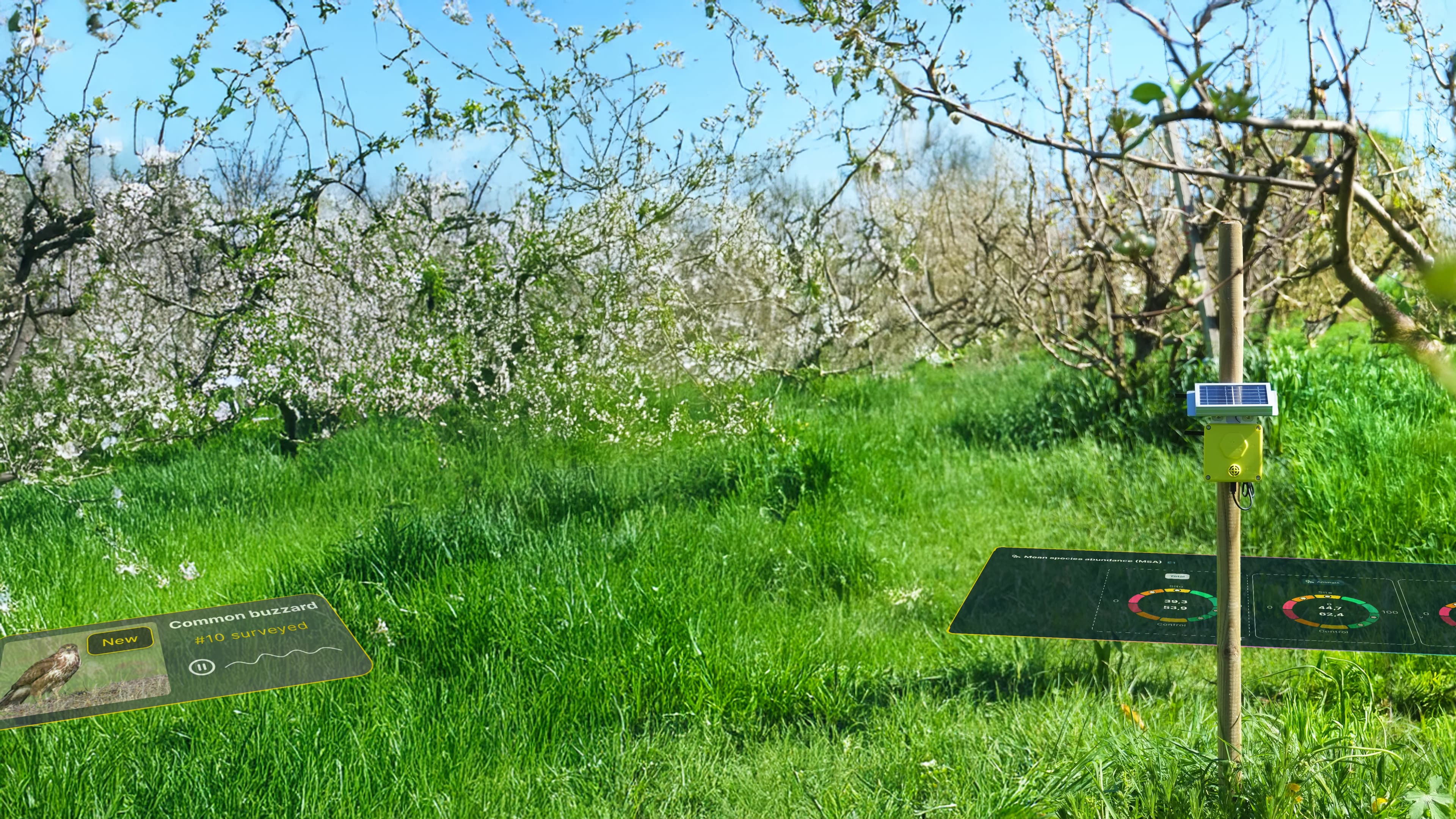
Organic at scale, validated by data from eight sites
Biodiversity monitoring across 8 organic farming sites between Emilia Romagna and Puglia to validate the impact of organic practices on diversified crops and different climatic contexts with scientific data.
monitored
monitored
installed
Organic farming between commitment and lack of data
Intensive agriculture is a key driver of biodiversity loss. Monocultures, pesticides and landscape simplification destroy habitats for pollinators and wildlife, degrading ecosystem services on which farming depends: pollination, soil fertility, water regulation. Regenerative agriculture aims to reverse this cycle, turning the farm into a biodiversity hub. Organic farming and sustainable supply chains claim to do better, but without structured data their impact on biodiversity remains a promise, not proof.
Validating the impact of organic farming on a multi-regional scale
Alce Nero promotes organic practices across its supply chain, but lacked structured data proving their real effect on biodiversity at its sites.
Monitoring across diverse crops and climates was needed, from Emilia Romagna to Puglia, to build a comparable scientific basis for all stakeholders.
24 Spectrum across 8 sites with multi-regional satellite analysis
XNatura designed monitoring across 8 organic sites in two regions, with data in the Environmental Platform for cross-site comparison.
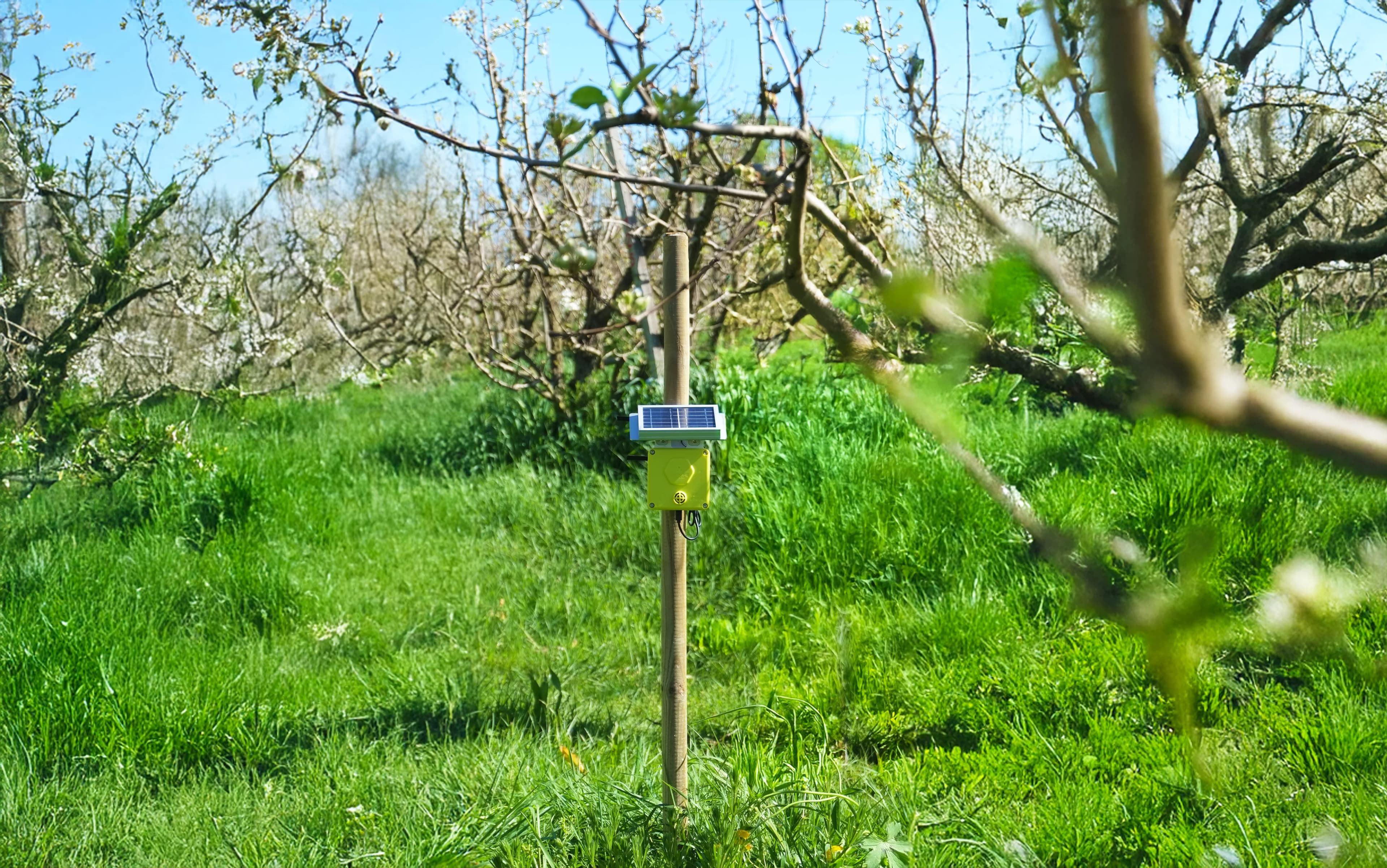
From satellite to the organic fields of two regions
A multi-year project integrating satellite analysis, acoustic sensors and site-control comparison to validate the impact of organic practices on biodiversity at multi-regional scale.
Ecological assessment of the 8 sites and control areas
Satellite analysis mapped the 1,200 hectares of the 8 sites and their respective control areas, producing the baseline of biodiversity indices: MSA (Mean Species Abundance), nectar potential, land cover, climate risks and hydrogeological risk. These data defined the starting point for comparison across sites and over time.
24 Spectrum across 8 production sites
The 24 Spectrum sensors were distributed across 8 organic farming sites between Emilia Romagna and Puglia to continuously detect the presence and acoustic diversity of pollinators. Multi-regional coverage allows comparison of pollinator communities across different crops and climatic contexts.
Organic vs conventional at multi-site scale
Satellite data and sensor data were integrated to compare the ecological conditions of the estate with the control area. The site-control comparison quantifies the difference in terms of MSA, nectar potential, pollinator diversity and land cover, documenting with scientific evidence the effect of organic practices across different crops and territories.
From data to supply chain communication
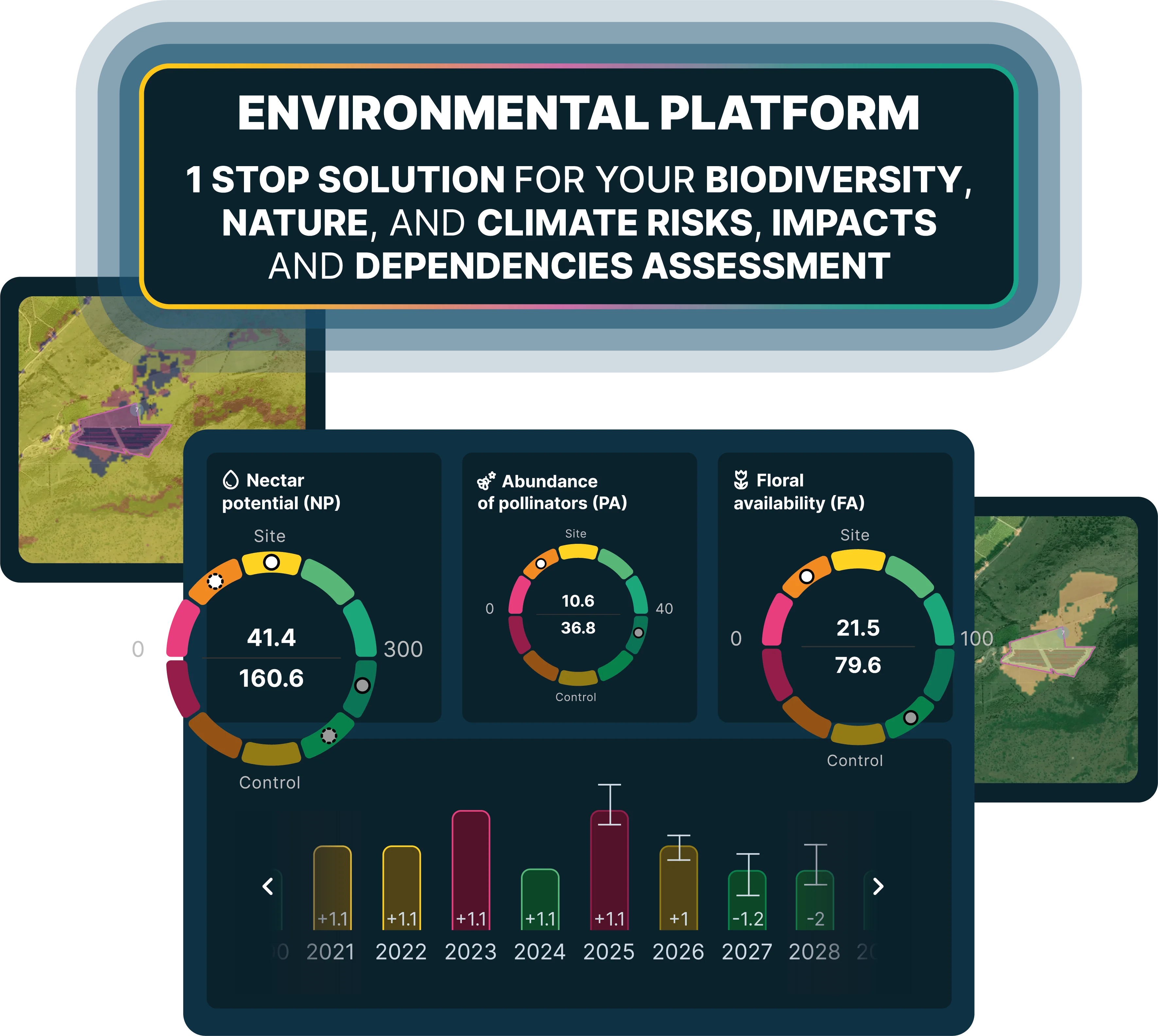
Data flows into the XNatura Environmental Platform, where Alce Nero monitors the evolution of biodiversity at its sites season after season. The goal is to build a multi-year historical series documenting the impact of organic practices at scale and providing the supply chain with an evidence-based communication tool for consumers, distributors and stakeholders.
Data from eight organic sites
monitored
identified
within 10 km
climate hotspots
The 24 Spectrum distributed across 8 sites monitored over 14,000 pollinators, identifying 19 distinct species clusters. Multi-regional monitoring allowed for the first time comparing pollinator communities across diversified organic crops and different climatic contexts, from Emilia Romagna to Puglia.
Five out of eight sites have protected areas within 10 km, confirming that Alce Nero's organic supply chain operates in territorial contexts of high ecological value, where the proximity of protected zones offers connectivity potential between agricultural and natural habitats. Six out of eight sites were classified as climate hotspots, highlighting the supply chain's exposure to climate change risks and the need for data-driven adaptation strategies.
Monitoring in action
Key sections of the XNatura Environmental Platform dedicated to Alce Nero.
State of biodiversity
MSA indices, Natural Patches, nectar potential and site-control comparison across 1,200 hectares of the 8 organic sites.
Microclimate
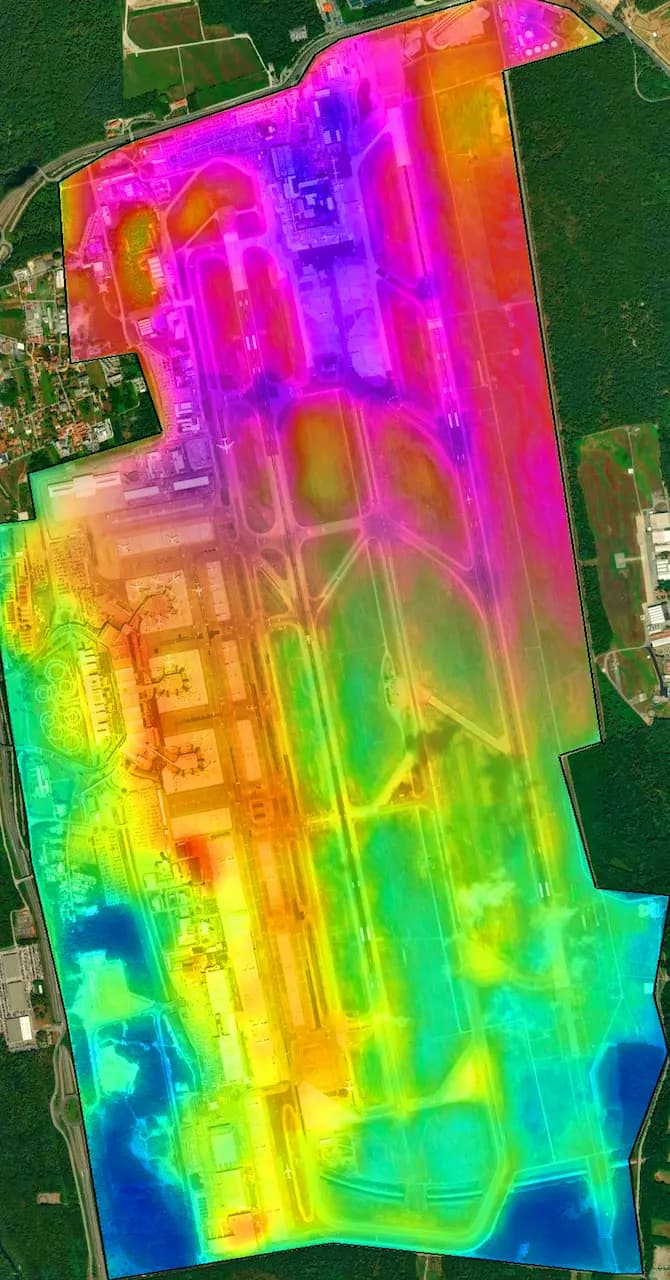
Surface temperature, light pollution and microclimatic parameters of the multi-regional organic farming sites.
Drought risk
Aridity indices, water stress and soil resilience of the estate in relation to climate change at sites between Emilia Romagna and Puglia.
Hydrogeological risk
Flood risk, landslide risk and hydrogeological analysis of the 8 production site terrains.
Access the XNatura Environmental Platform
The platform with which Alce Nero monitors the biodiversity of its production sites and documents the impact of organic practices with data comparable across sites and over time.
Do you want to measure the biodiversity of your farm?
XNatura supports farms, supply chains and consortia in biodiversity monitoring with IoT sensors, satellite mapping, site-control comparison and validated scientific protocols.
 Contact us for information about the platform or for specialized consulting in the environmental field.