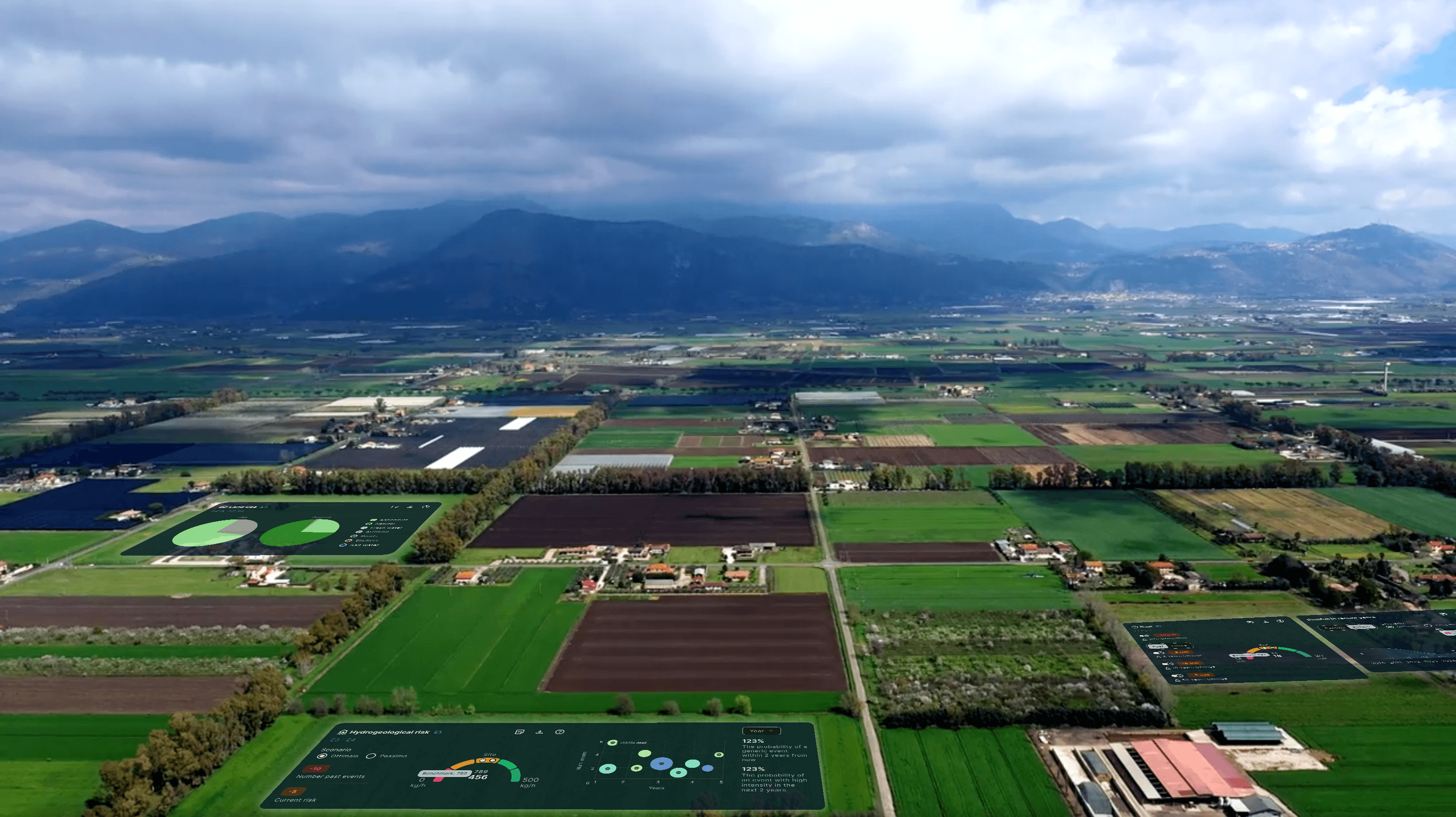
Findus monitors regenerative practices in its vegetable supply chain
Biodiversity monitoring across 27 vegetable supply chain sites in Abruzzo, Lazio, and Puglia: chard, spinach, and diversified crops monitored with IoT sensors, biomonitoring, and satellite mapping to measure the impact of farming on ecosystems.
monitored
monitored
installed
The paradox of major brands: best practices without supplier data
Major food brands define sustainability protocols for their supply chain but struggle to obtain objective data from suppliers. Farms rarely have monitoring tools, and available information is often self-reported or fragmented, leaving no scientific basis to measure starting points or track progress.
Objective data from the supply chain that suppliers could not provide
Supply chain suppliers lacked tools to produce structured environmental data. Without independent measurement, biodiversity at sourcing sites was unknown.
A partner was needed to monitor 27 sites in different climate contexts, build a scientific baseline, and produce comparable data for regeneration.
35 IoT sensors across 27 sites with biomonitoring and satellite analysis
XNatura designed a monitoring system across 27 sites in three regions with Hive-Tech, Spectrum, satellite analysis, and a Biodiversity Oasis.
From satellite to the vegetable supply chain fields
A multi-year project integrating satellite analysis, acoustic sensors, and site-control comparison to measure the supply chain's impact on biodiversity and guide the transition toward more sustainable practices.
Ecological assessment of 27 sites and control areas
Satellite analysis mapped the 969 hectares across 27 sites in Abruzzo, Lazio, and Puglia along with their respective control areas, producing the baseline of biodiversity indices: MSA, nectar potential, land cover, climate risks, and hydrogeological risk. These data established the starting point for cross-site comparison and for identifying intervention priorities.
35 IoT sensors across 27 supply chain sites
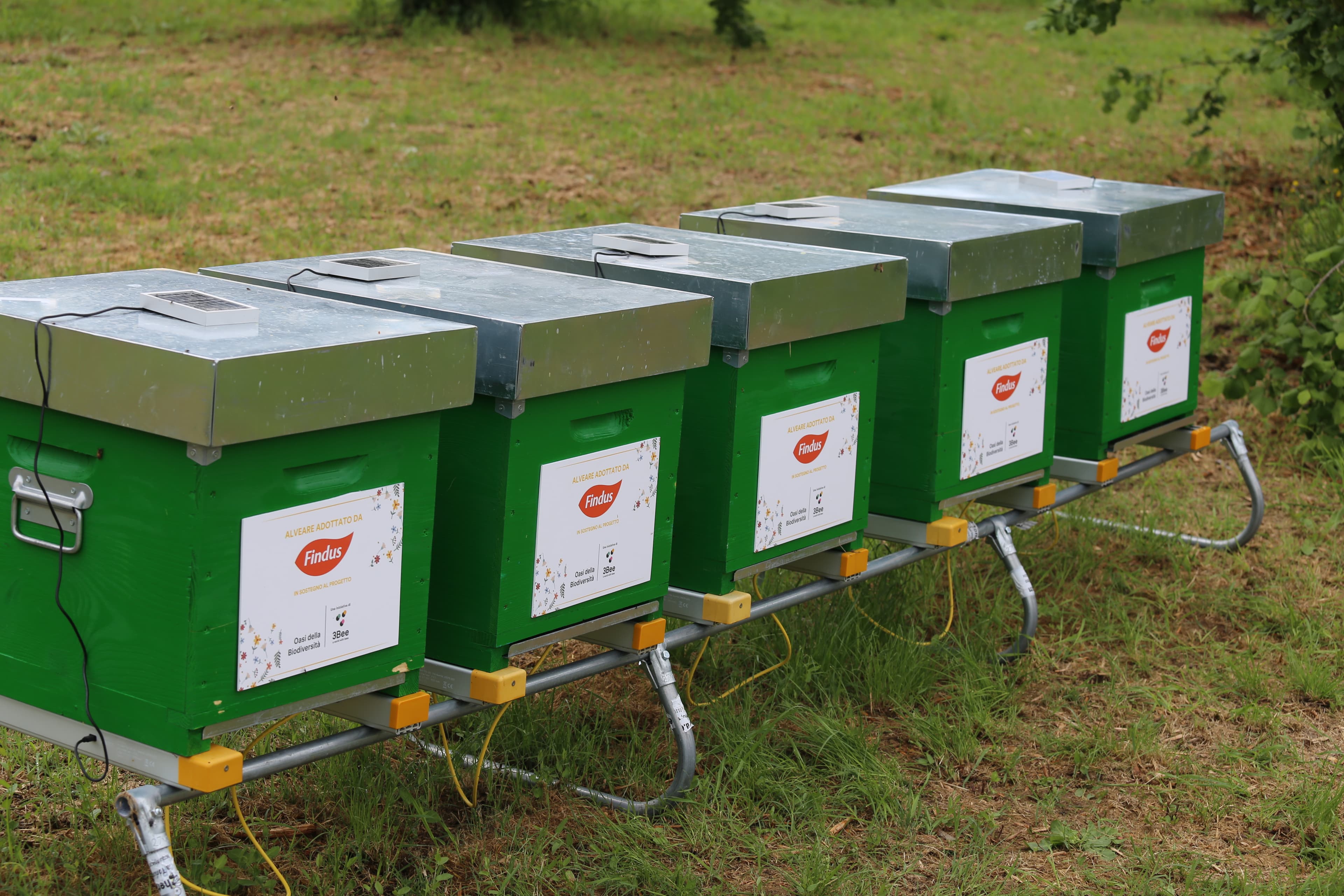
The 35 IoT sensors, including Hive-Tech for biomonitoring and Spectrum for acoustic pollinator census, were distributed across 27 supply chain sites in Abruzzo, Lazio, and Puglia. Hive-Tech units directly monitor colonies and serve as sentinels to detect environmental anomalies, while Spectrum sensors detect the diversity and density of wild pollinators.
Supply chain analysis and priority identification
Satellite and sensor data were integrated to produce a complete picture of biodiversity at each site. The analysis identified the most critical sites, mapped proximity to protected areas, and classified climate hotspots, providing Findus with a basis for prioritizing regeneration interventions.
5 Hive-Tech units and 100 nectar-producing trees at the heart of the supply chain
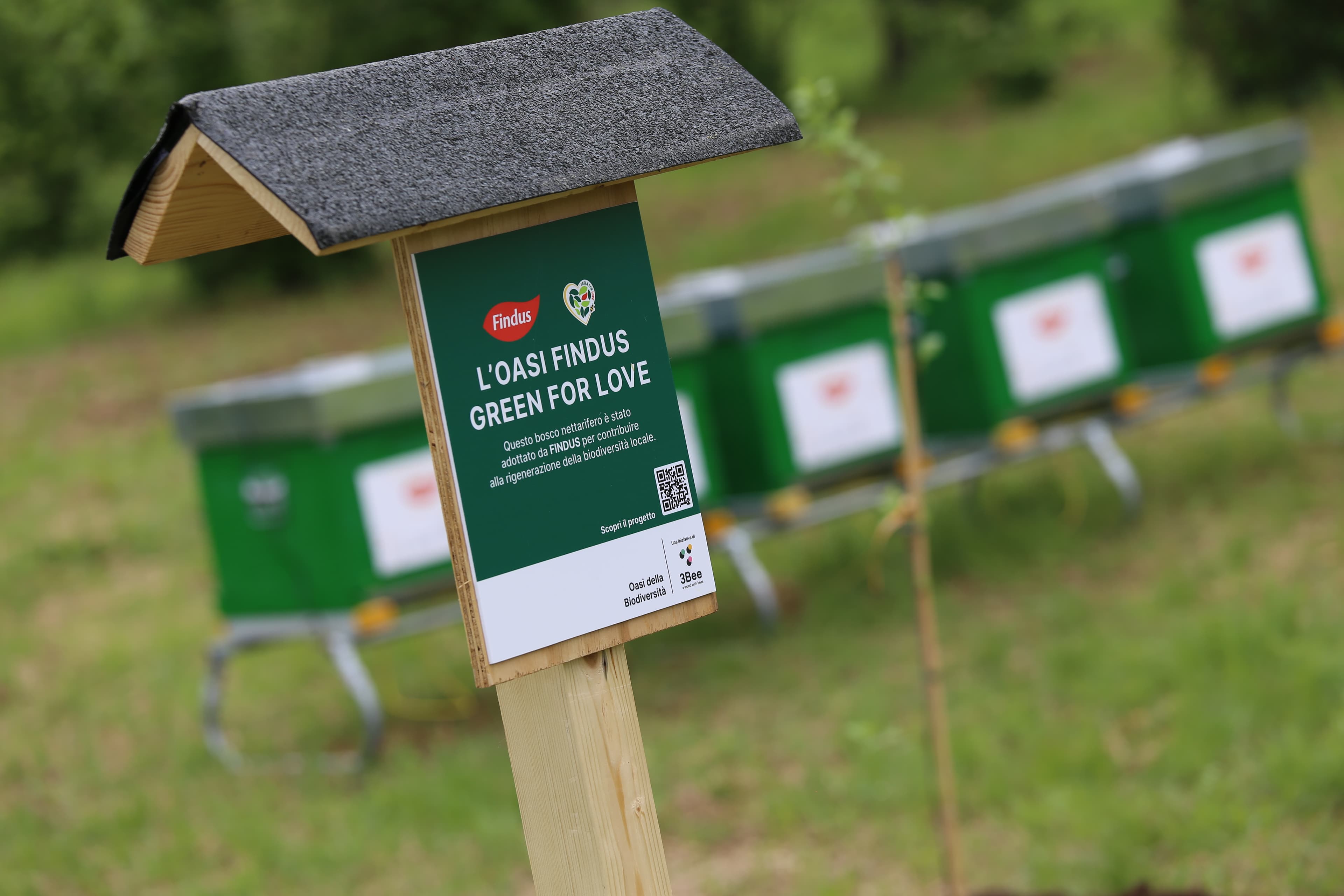
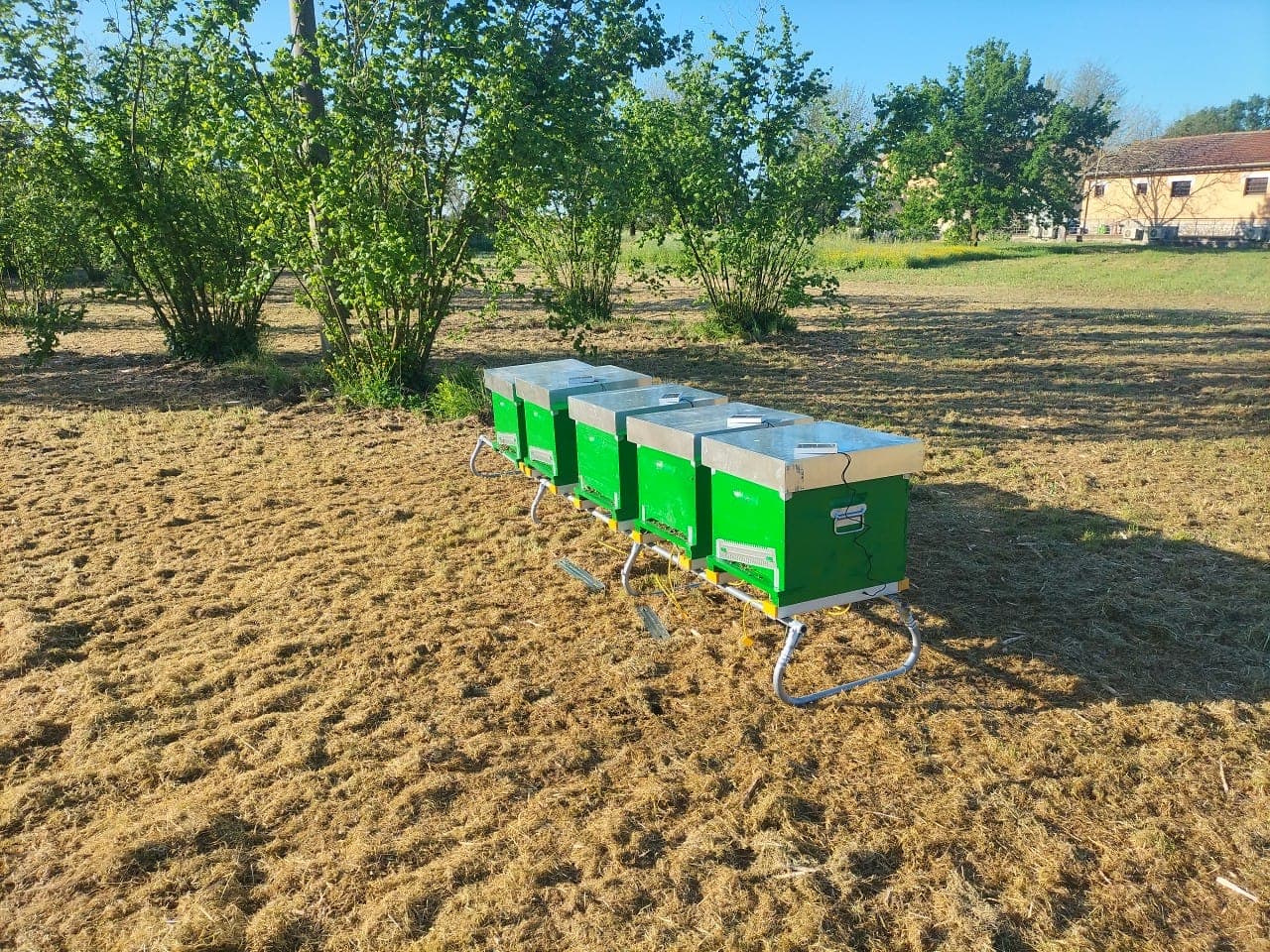
The Findus Biodiversity Oasis represents the supply chain's direct regeneration intervention. 5 sensorized beehives with Hive-Tech and 100 native nectar-producing trees create a permanent habitat supporting pollinators and local biodiversity, transforming a supply chain area into an active, monitored ecological node.
From measurement to regeneration
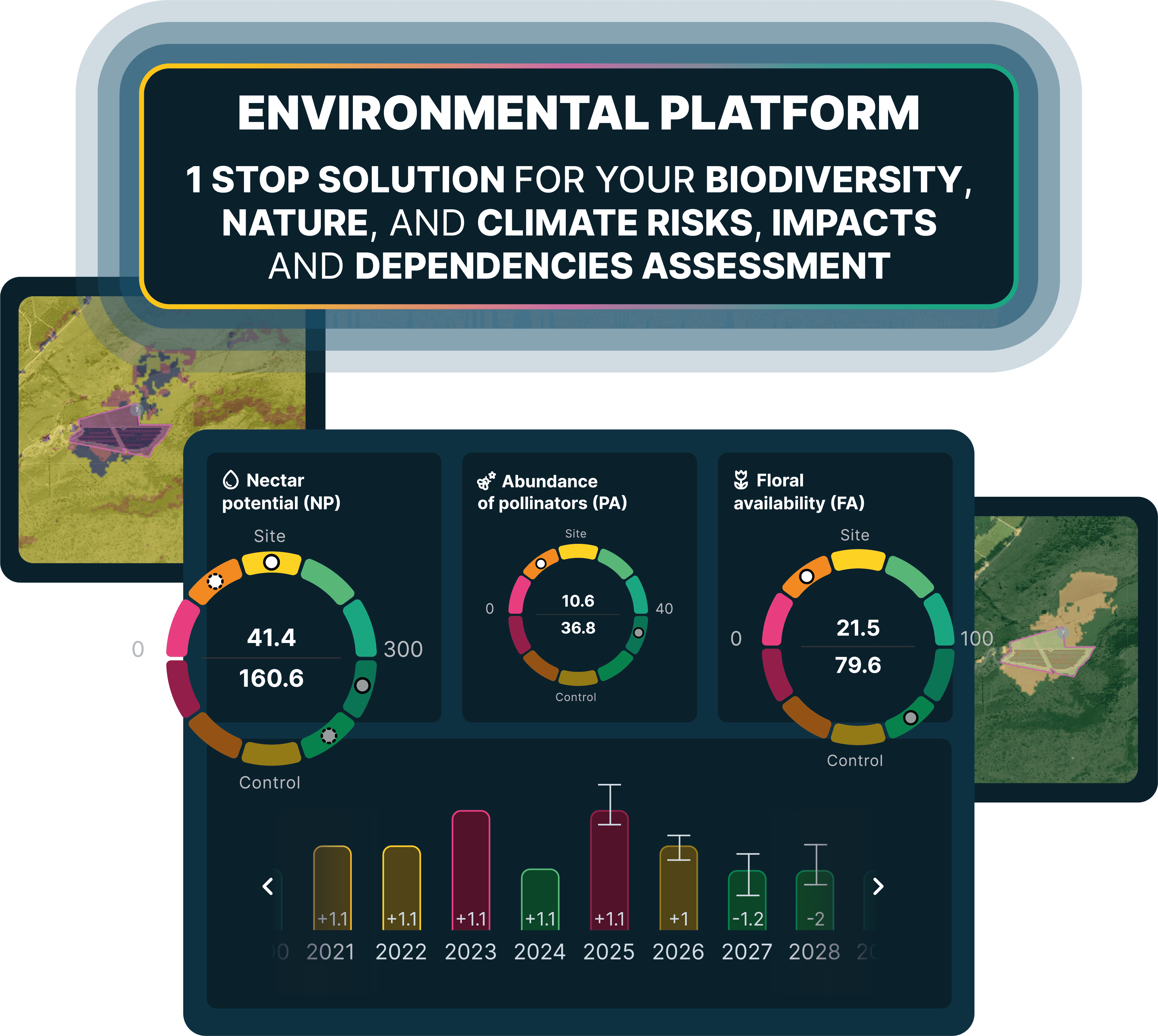
Data flows into the XNatura Environmental Platform, where Findus monitors the evolution of biodiversity across its sourcing sites. The goal is to build a multi-year time series that measures the effect of regeneration interventions and provides the supply chain with an evidence-based communication tool for consumers and stakeholders.
Data from 27 supply chain sites
lower than control
across sites (MSA-based)
within 10 km
climate hotspots
At 25 out of 27 sites, the MSA Land Use index of the site is lower than that of the control area, confirming that supply chain cultivation generates a measurable impact on biodiversity compared to the surrounding territory. The MSA-based analysis identifies 864 impacted hectares out of 968 total monitored, quantifying for the first time the supply chain surface area where ecological conditions are degraded relative to the natural context. These data enable Findus to identify the most critical sites and prioritize regeneration interventions where the impact is greatest.
All 27 sites have protected areas within 10 km, confirming that the supply chain operates in ecologically significant contexts where the management of chard, spinach, and diversified crop cultivation has a direct impact on surrounding ecosystems. 25 out of 27 sites were classified as climate hotspots, highlighting the supply chain's structural exposure to climate change and the need for adaptation strategies based on distributed data.
Monitoring in action
Key sections of the XNatura Environmental Platform dedicated to Findus.
Biodiversity status
MSA indices, Natural Patches, nectar potential, and site-control comparison across the 969 hectares of 27 supply chain sites.
Microclimate
Surface temperature, light pollution, and microclimatic parameters of the vegetable supply chain sites across Abruzzo, Lazio, and Puglia.
Drought risk
Aridity indices, water stress, and soil resilience relative to climate change across sites in Abruzzo, Lazio, and Puglia.
Hydrogeological risk
Flood risk, landslide risk, and hydrogeological analysis of the 27 supply chain sites.
Access the XNatura Environmental Platform
The platform Findus uses to monitor biodiversity across its sourcing sites and measure the vegetable supply chain's impact with comparable data across sites and over time.
Do you want to measure your farm's biodiversity?
XNatura supports farms, supply chains, and consortia in biodiversity monitoring with IoT sensors, satellite mapping, site-control comparison, and validated scientific protocols.
 Contact us for information about the platform or for specialized consulting in the environmental field.