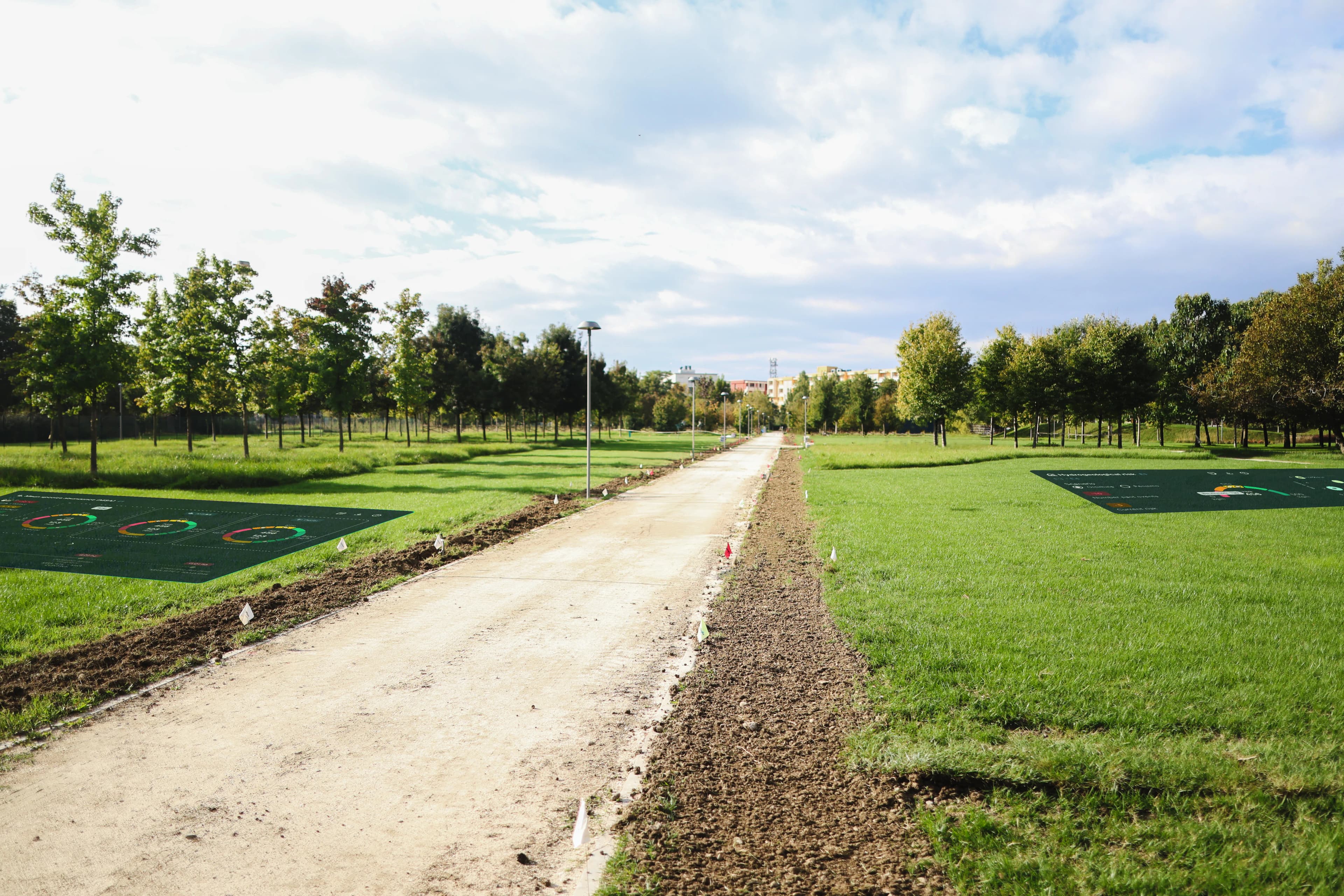
The corporate park becomes a measurable biodiversity oasis
Biodiversity monitoring and regeneration at the Green Life Park of the Parma headquarters: Spectrum bioacoustic sensors, PollyX, pollinator shelters and satellite mapping to transform the corporate park into a functional ecosystem.
monitored
installed
shelters
Corporate parks: heat islands, fragmented habitats and invisible ecosystem services
A corporate park in an urban setting suffers from heat islands, air pollution from traffic and industrial activities, habitat fragmentation and water stress, with direct impacts on the ecological functionality of green spaces. The quality of the working environment for employees depends on ecosystem services such as pollination, microclimatic regulation and air filtration, which without monitoring remain invisible.
Measuring the ecological value of the corporate park
Credit Agricole Italia wanted to know whether the Green Life Park at its Parma headquarters generates a real ecological impact or remains merely ornamental greenery, with scientific data integrable into ESG frameworks.
Evidence was needed to compare the park with the surrounding urban context and to engage employees through environmental awareness events.
Monitoring and regeneration across 13 hectares of the Green Life Park
XNatura responded with an integrated system of IoT sensors, pollinator shelters and satellite mapping to quantify the park's biodiversity and compare it with the surrounding territory.
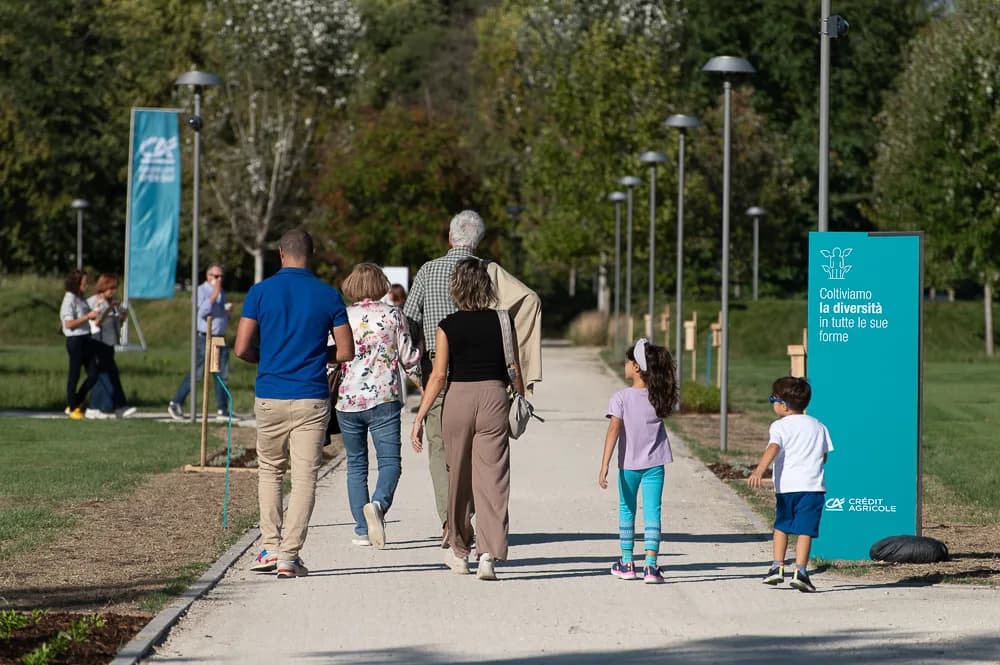
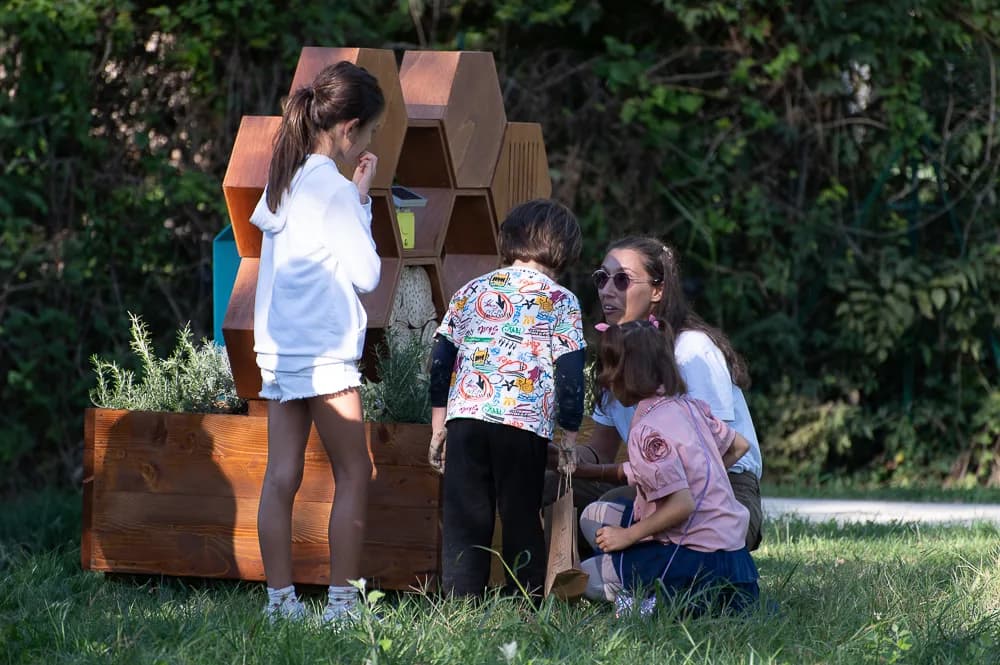
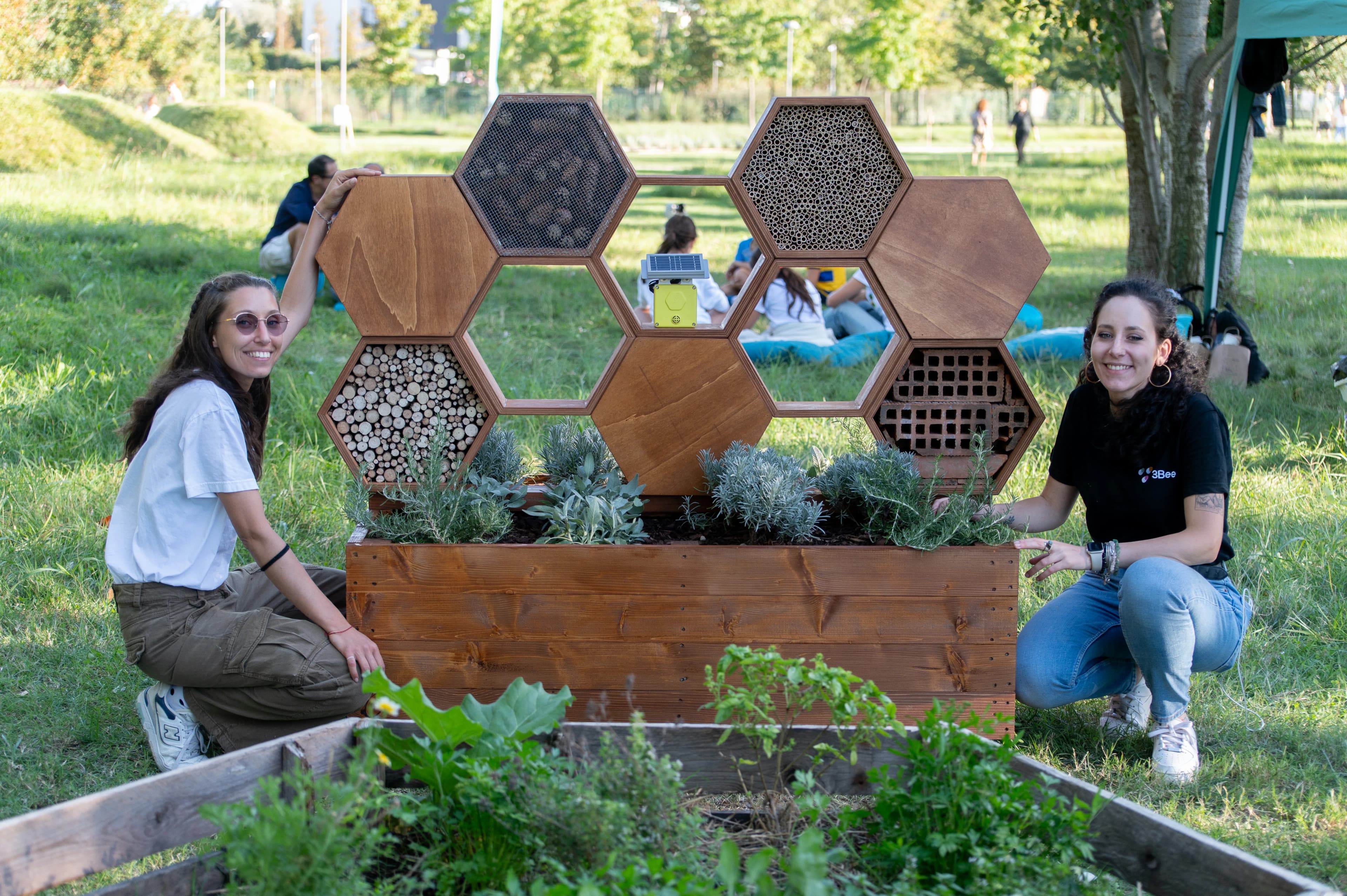
From satellite to the Green Life Park
A project integrating remote sensing, bioacoustic IoT sensors, pollinator shelters and employee engagement to transform the corporate park into a monitored and regenerated ecosystem.
Ecological assessment of the Green Life Park
Satellite analysis mapped the 13 hectares of the Green Life Park and a control area, producing the baseline of biodiversity indices including MSA, nectar potential, land cover, drought risk and hydrogeological risk. The results guided the positioning of sensors and shelters, identifying areas with the greatest ecological potential.
Five IoT sensors and 24 shelters in the park
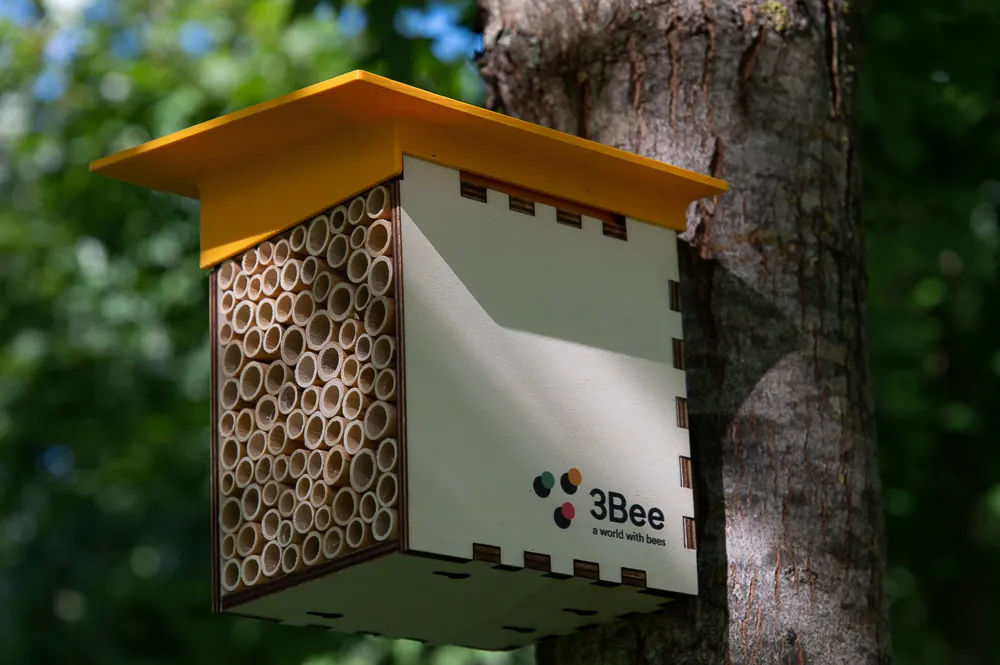
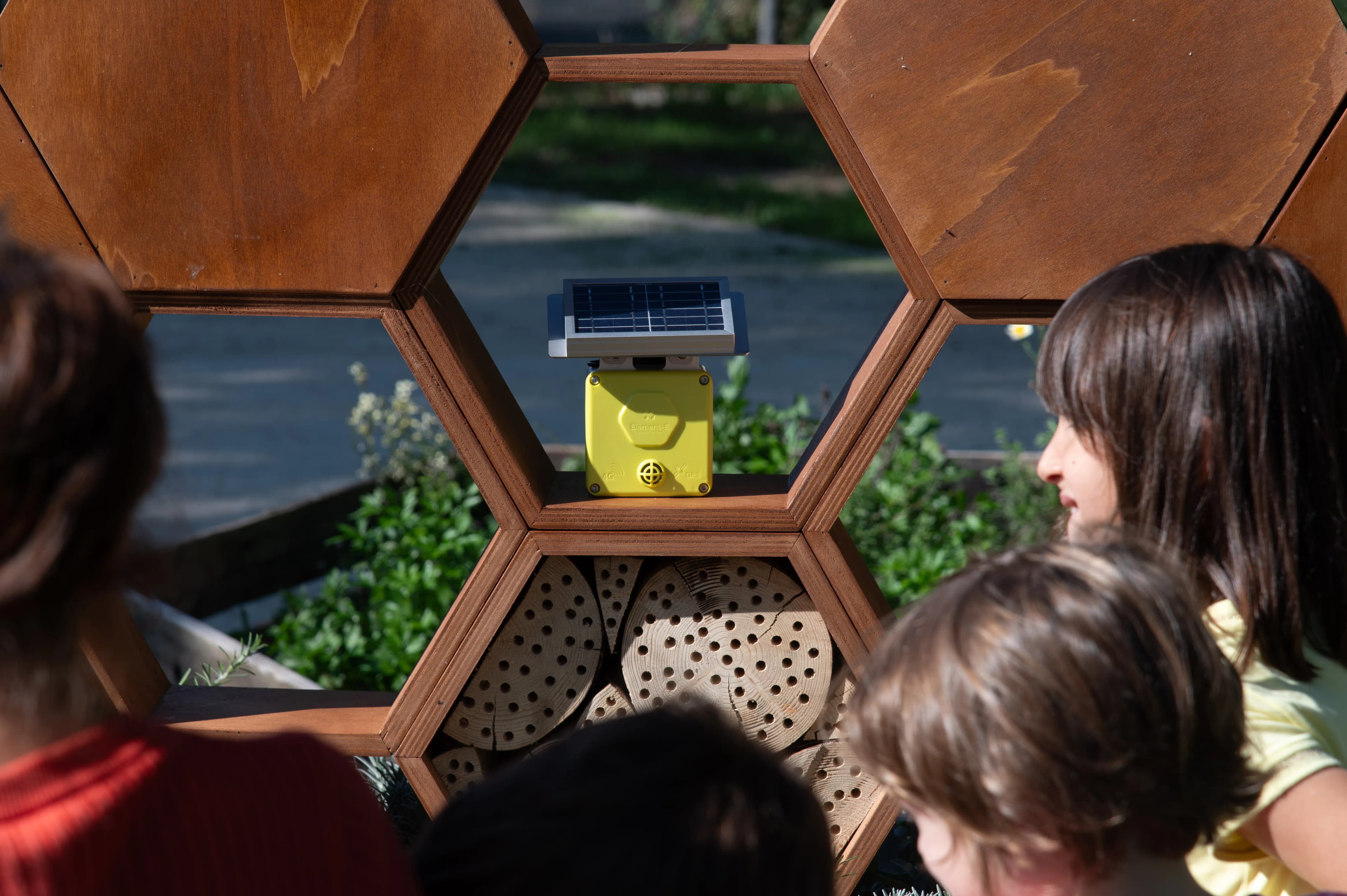
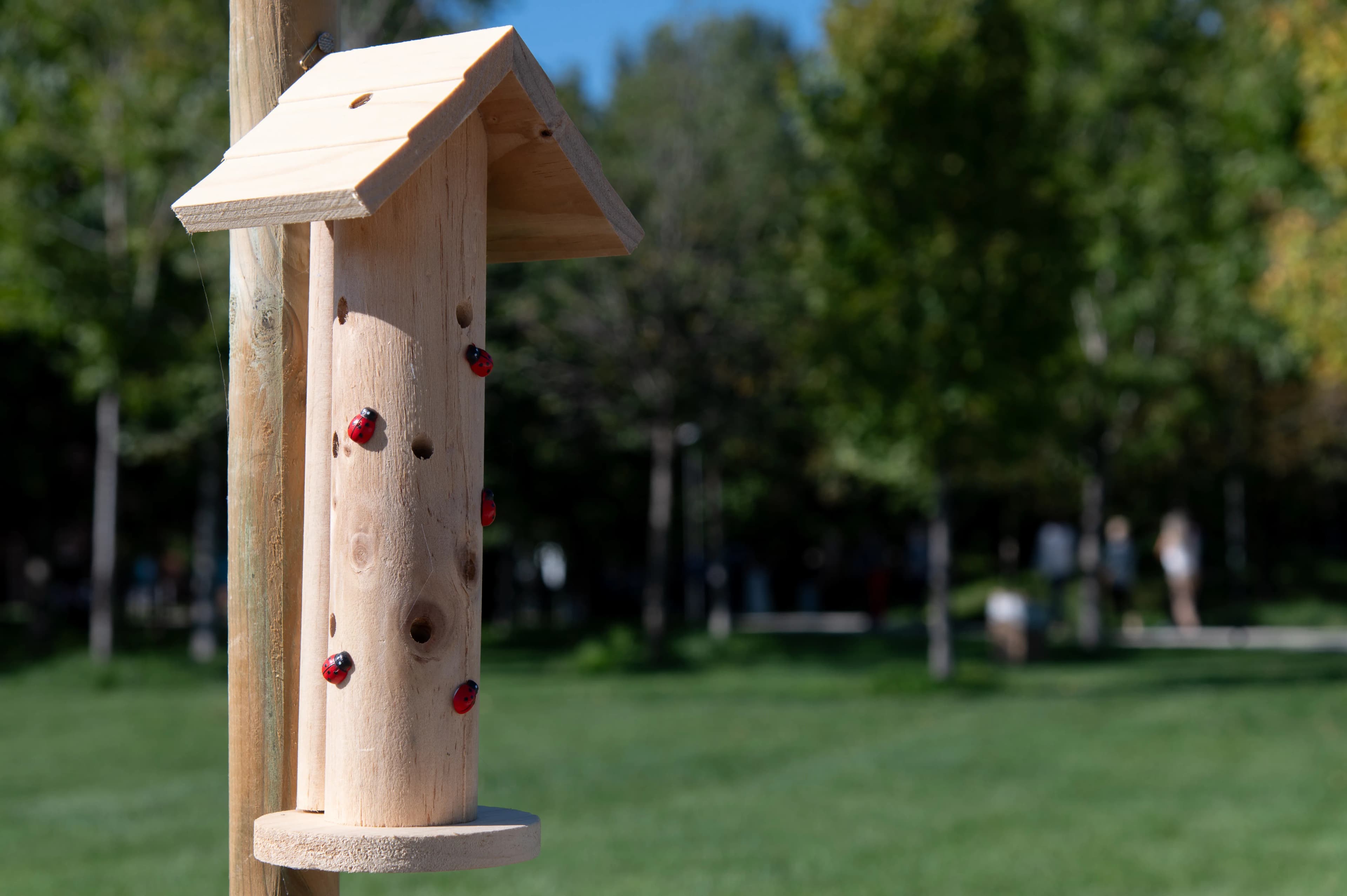
In the Green Life Park, 2 Spectrum bioacoustic sensors were installed for continuous pollinator census, 1 PollyX for air quality monitoring and 2 biomonitoring beehives. In parallel, 24 wild pollinator shelters were distributed along paths enriched with alternating rows of over 20 different nectar-bearing plant species, creating nesting habitats and food resources for solitary bees, butterflies and ladybugs.
The park as an engagement tool
The project integrated environmental awareness activities for headquarters employees, transforming the Green Life Park into a space for discovery and biodiversity education. Data from the XNatura platform makes the park's ecological evolution visible, offering concrete content for internal and external communication and ESG reporting.
From data to adaptive park management
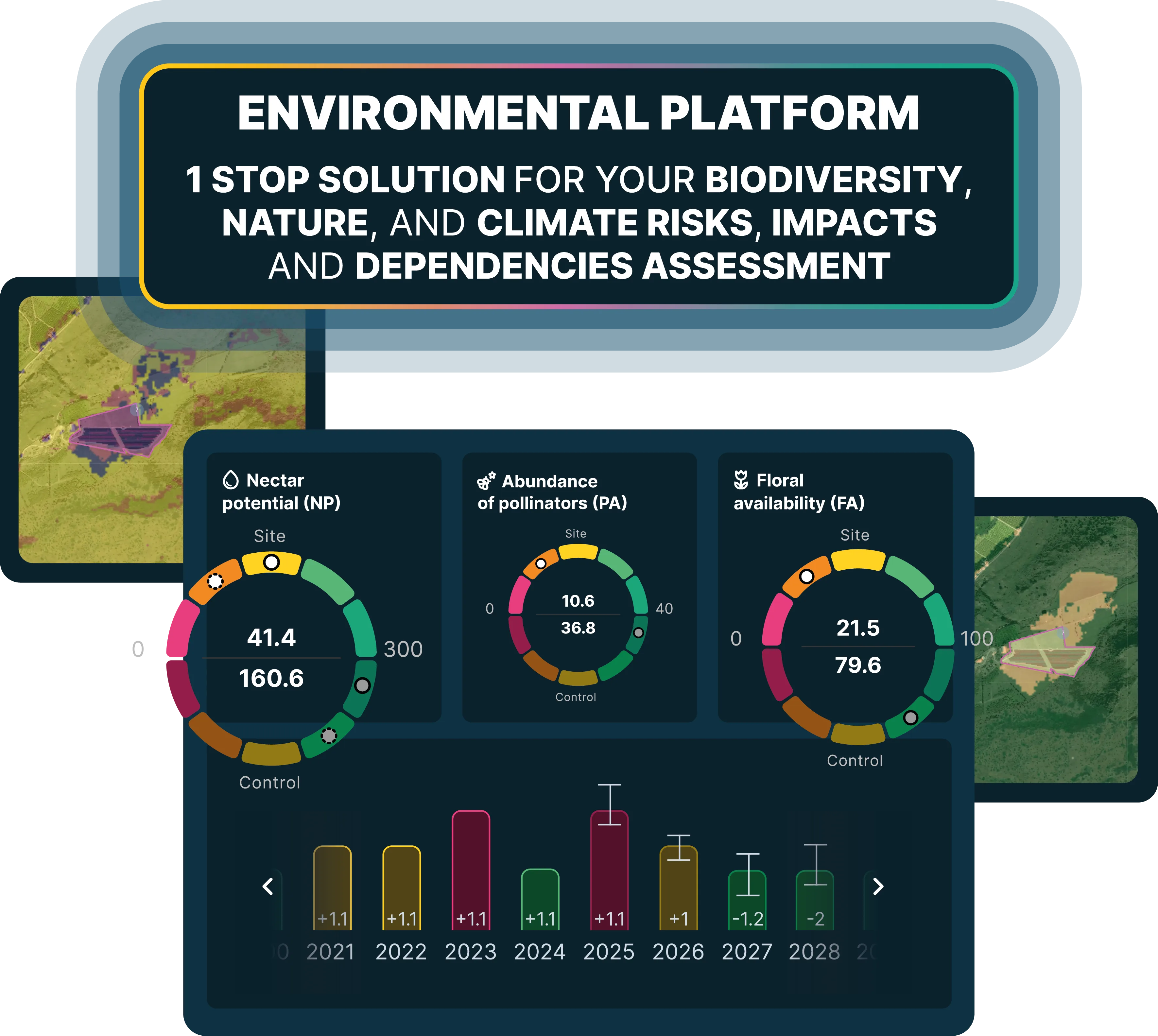
Data flows into the XNatura Environmental Platform, where Credit Agricole monitors biodiversity evolution season after season. The goal is to build a historical series documenting the ecological improvement of the Green Life Park over time and provide a scientific basis for corporate green space management decisions and for extending the model to other group sites.
Data from the Green Life Park
site-control
monitored
identified
by shelters (est.)
The site-control comparison shows a delta of +4.50 on the MSA Land Use index: the Green Life Park scores 26.2 versus 21.7 for the control area, confirming that the park generates better ecological conditions than the surrounding urban context.
The 2 Spectrum sensors monitored 1,210 pollinators classified into 17 distinct clusters. The 24 shelters protected approximately 6,100 individuals (estimate) including solitary bees, butterflies and ladybugs, demonstrating that providing nesting habitats in an urban context produces a concrete ecological response.
Monitoring in action
Key sections of the XNatura Environmental Platform dedicated to the Green Life Park of Credit Agricole Italia.
Land cover
MSA indices, land cover, Natural Patches, floral availability and nectar potential of the Green Life Park and control area.
Microclimate
Surface temperature, urban heat island, light pollution and microclimatic parameters detected by PollyX in the Green Life Park.
Hydrogeological risk
Aridity indices, vegetation water stress and drought impact on plant species in the Green Life Park.
Drought risk
Flood risk and hydrogeological analysis of the headquarters area for site resilience assessment.
Access the XNatura Environmental Platform
The platform through which Credit Agricole Italia monitors biodiversity and environmental quality of the Green Life Park at its Parma headquarters.
Do you want to monitor the biodiversity of your corporate site?
XNatura supports companies, municipalities and protected areas in monitoring and regenerating biodiversity, with pollinator shelters, IoT sensors, satellite mapping and validated scientific protocols, producing data integrable into ESG and reporting frameworks.
 Contact us for information about the platform or for specialized consulting in the environmental field.