Monitoring and regeneration of biodiversity at corporate sites
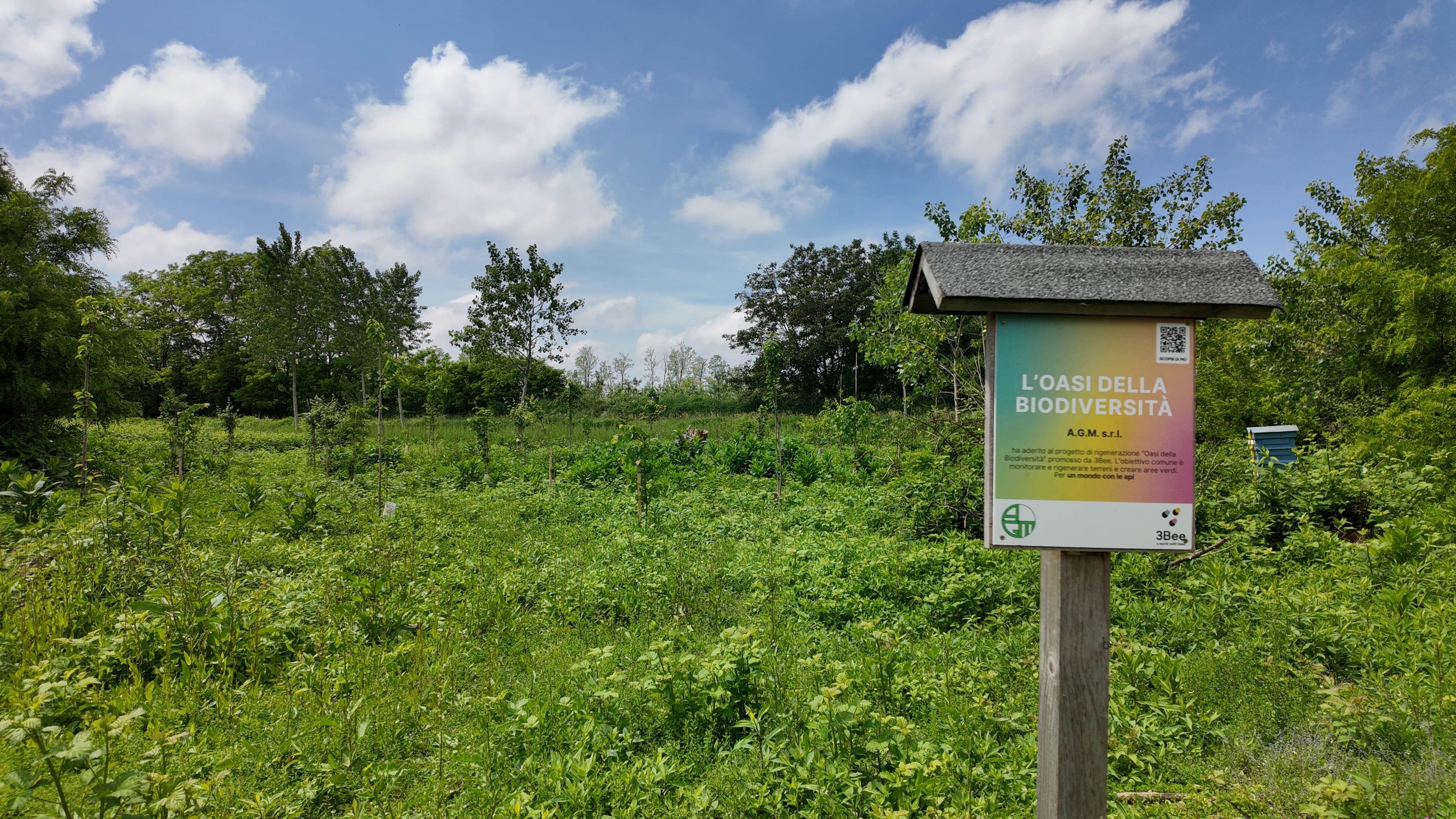
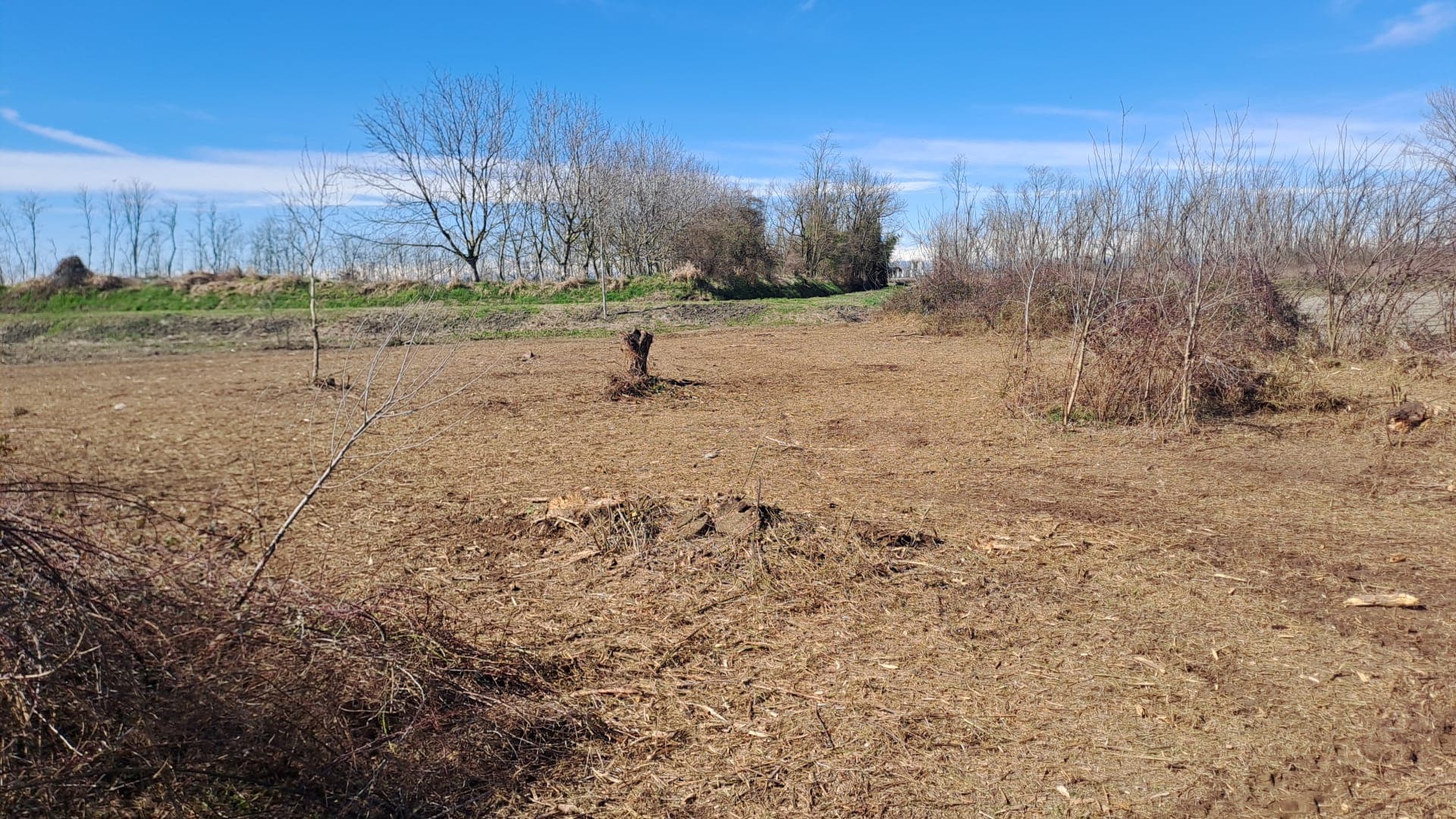
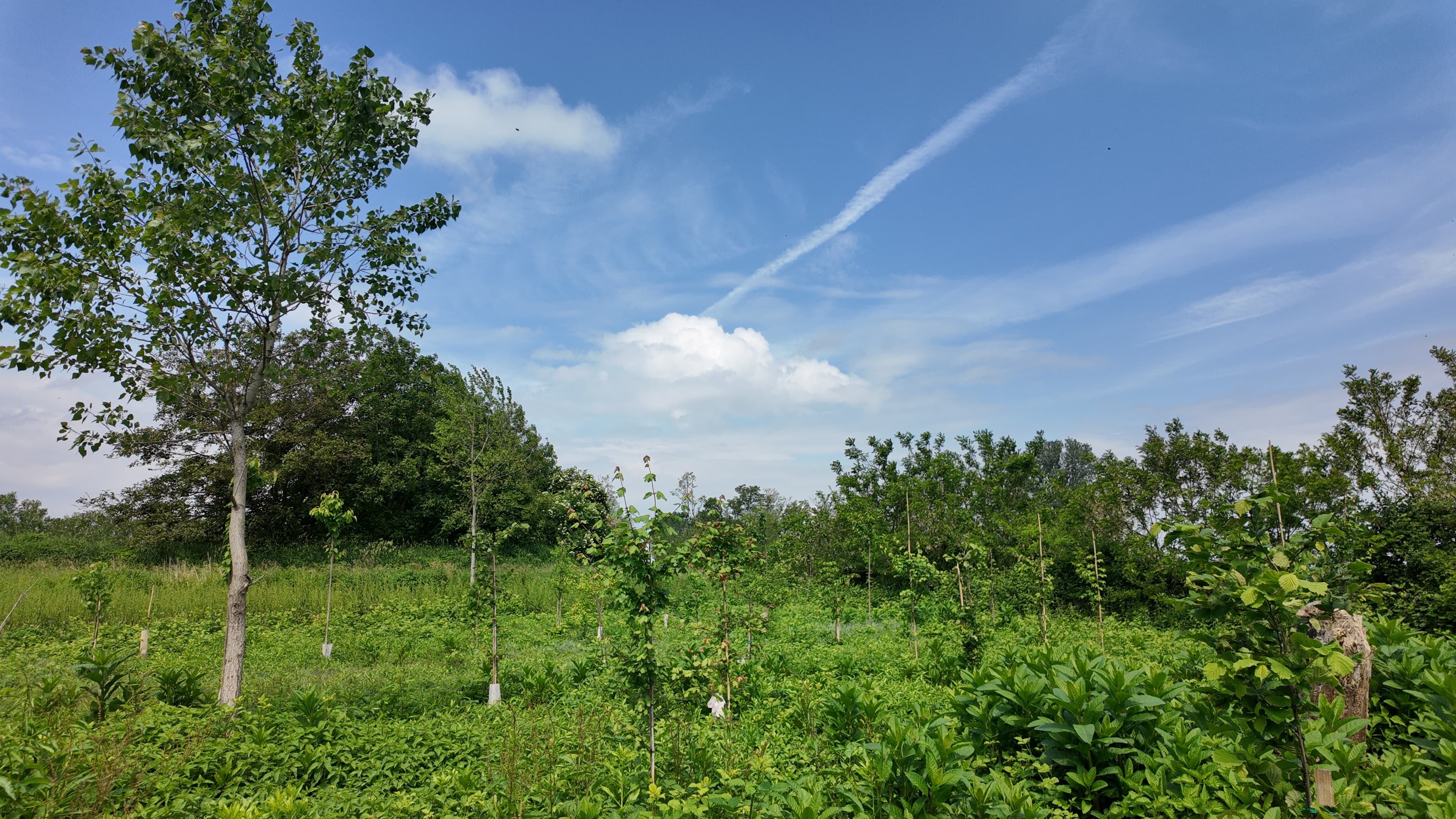
AGM Inks embarked on a three-year journey of biodiversity monitoring and regeneration, transforming an uncultivated area near its Tornaco (NO) plant into a Biodiversity Oasis accessible to the local community, featuring nectariferous species, a technological apiary and IoT sensors.
monitored
installed
planted
The chemical-manufacturing sector between production impacts and nature dependencies
The production of inks and coatings exerts pressure on local ecosystems through soil sealing, atmospheric emissions and high water resource consumption. Air quality, soil stability and water availability are essential ecosystem services also for ensuring the operational continuity of production plants.
A three-year journey to monitor and regenerate biodiversity at production sites
AGM Inks wanted to create a biodiversity oasis with concrete regeneration actions in the area adjacent to its production site.
A continuous monitoring system via IoT sensors was needed to produce real, verifiable data for sustainability reporting.
Biodiversity oasis, IoT sensors and remote assessment across two sites
Monitoring and regeneration: from uncultivated land to biodiversity oasis open to all
A three-year journey combining remote assessment, oasis creation and continuous monitoring with IoT sensors.
Environmental baseline for both corporate sites
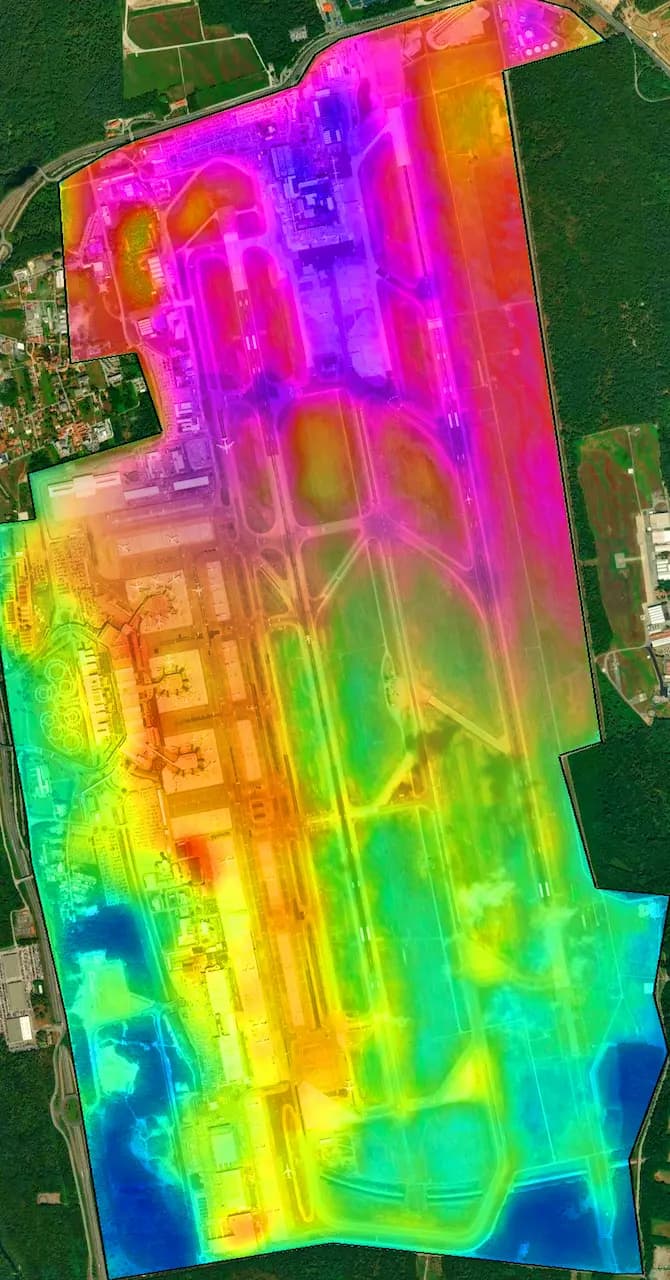
Satellite imagery analysis produced the environmental baseline for each site. Starting from land use and land cover analysis, biodiversity KPIs were extracted, including MSA with site-control comparison, environmental risks and proximity to protected areas in the surroundings.
Nectariferous oasis, apiaries and three IoT sensors
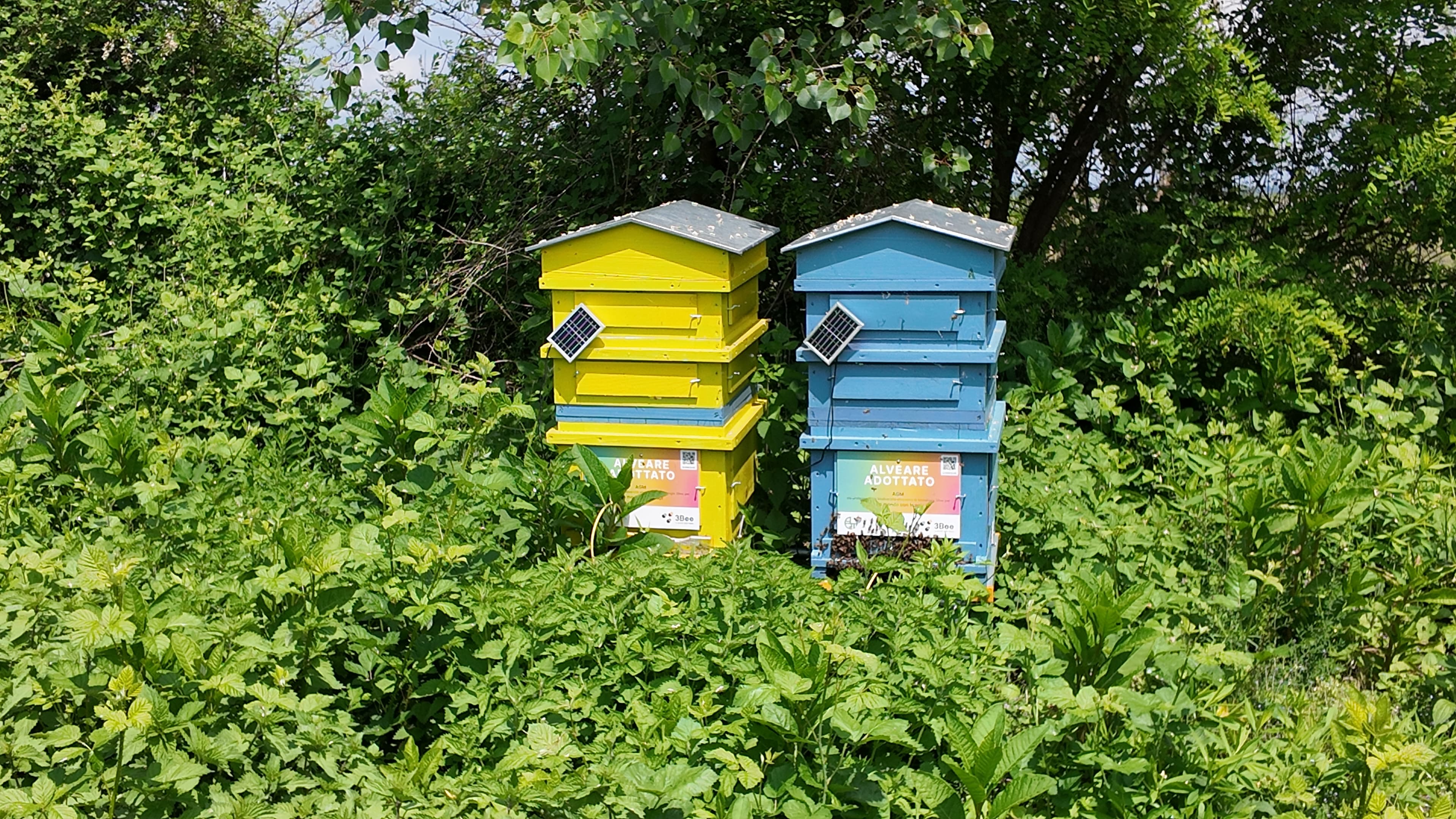
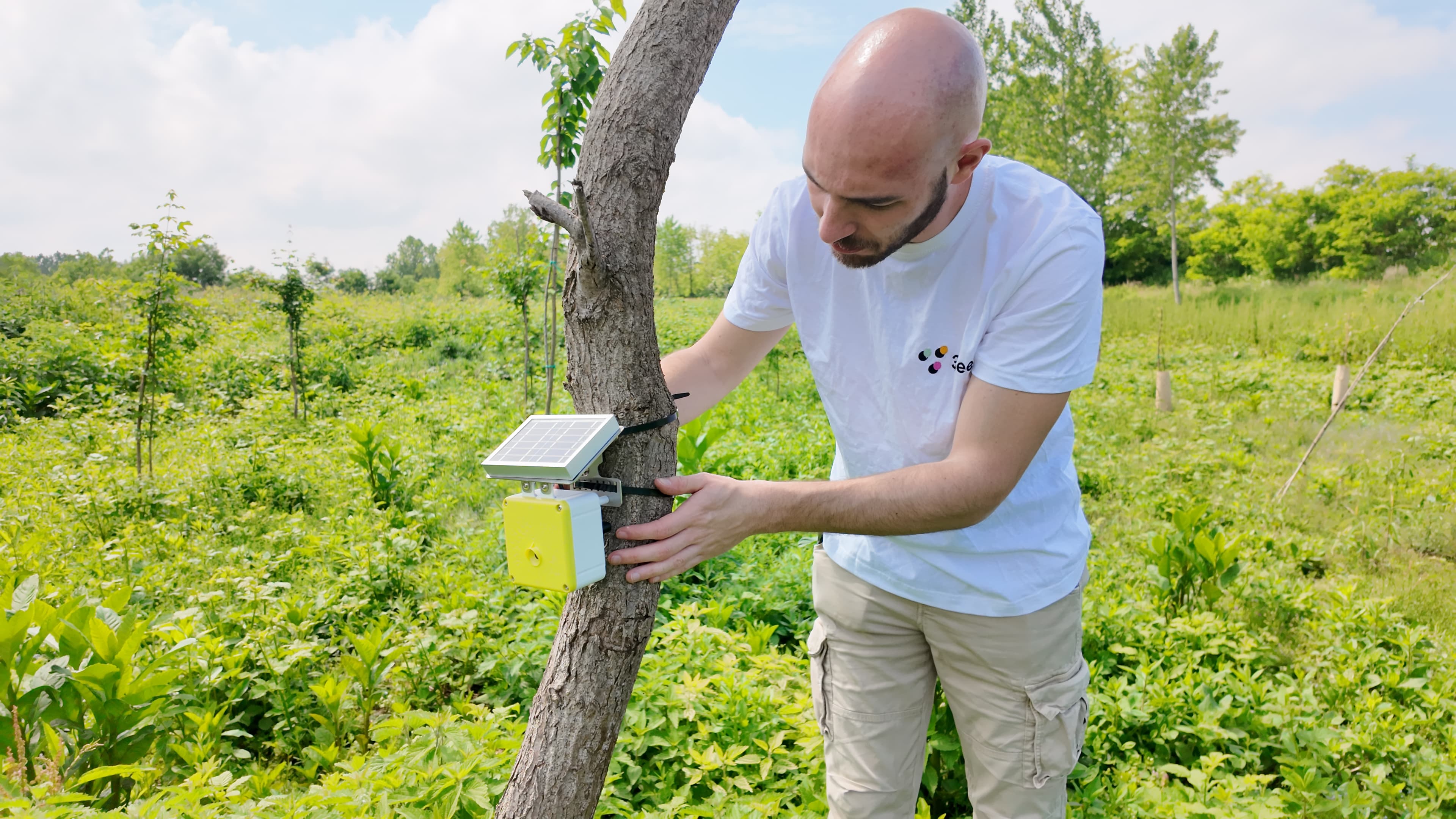
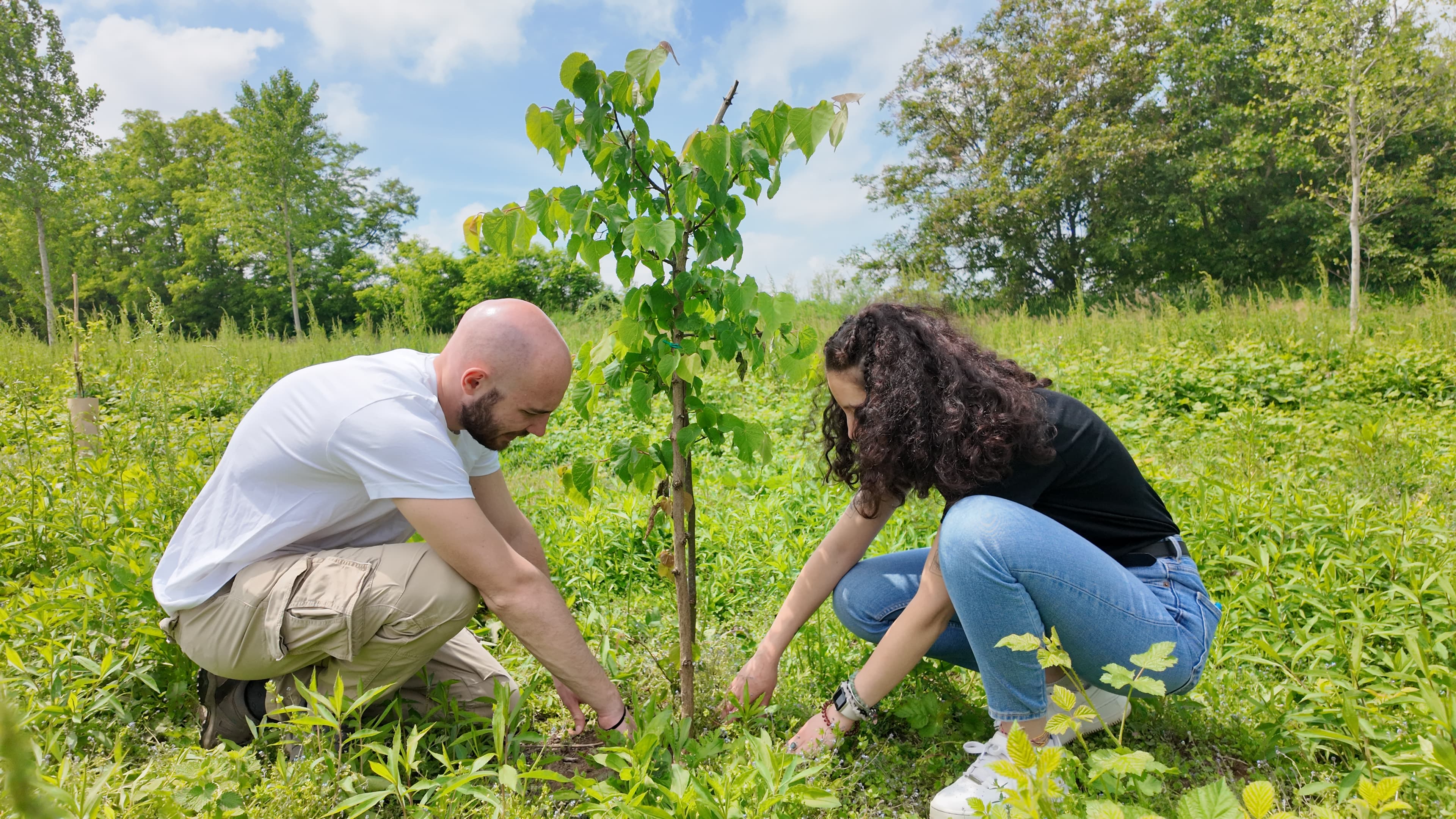
In the 0.63-hectare area adjacent to the Tornaco headquarters, 55 nectariferous plants were planted and an apiary with 2 hives equipped with HiveTech technology and an IoT sensor for wild pollinator monitoring was installed. Over the years, the project also closely involved the local community of Tornaco, which took centre stage at a planting event in April 2025 that made the Oasis even more of a shared project.
Field and satellite data collection to measure evolution
Continuous monitoring integrates satellite data with Spectrum and Hive-Tech sensor readings, documenting the evolution of biodiversity over time. Data feeds into the platform to support AGM Inks sustainability reporting.
Towards project expansion
In early 2026, the regeneration of a new area of the Oasis began, with the goal of enriching it with nectariferous species seeding, educational trails and community spaces where people can sit and experience biodiversity up close.
What emerges from monitoring both sites
site vs control
monitored
identified
within 10 km
The site-control comparison shows a delta of +42 on the MSA Land Use index: AGM Inks sites reach a value of 55.9 versus 14.2 for the control area, reflecting the presence of the biodiversity oasis and nectariferous forest compared to the surrounding urbanised context. The 10 protected areas within 10 km confirm the ecological potential of the territory.
Spectrum sensors monitored 722 pollinators and identified 19 clusters, documenting the diversity of populations present at the sites. Hive-Tech sensors continuously monitor the health of the apiary and environmental parameters of the area, integrating field data with the satellite assessment.
Monitoring in action
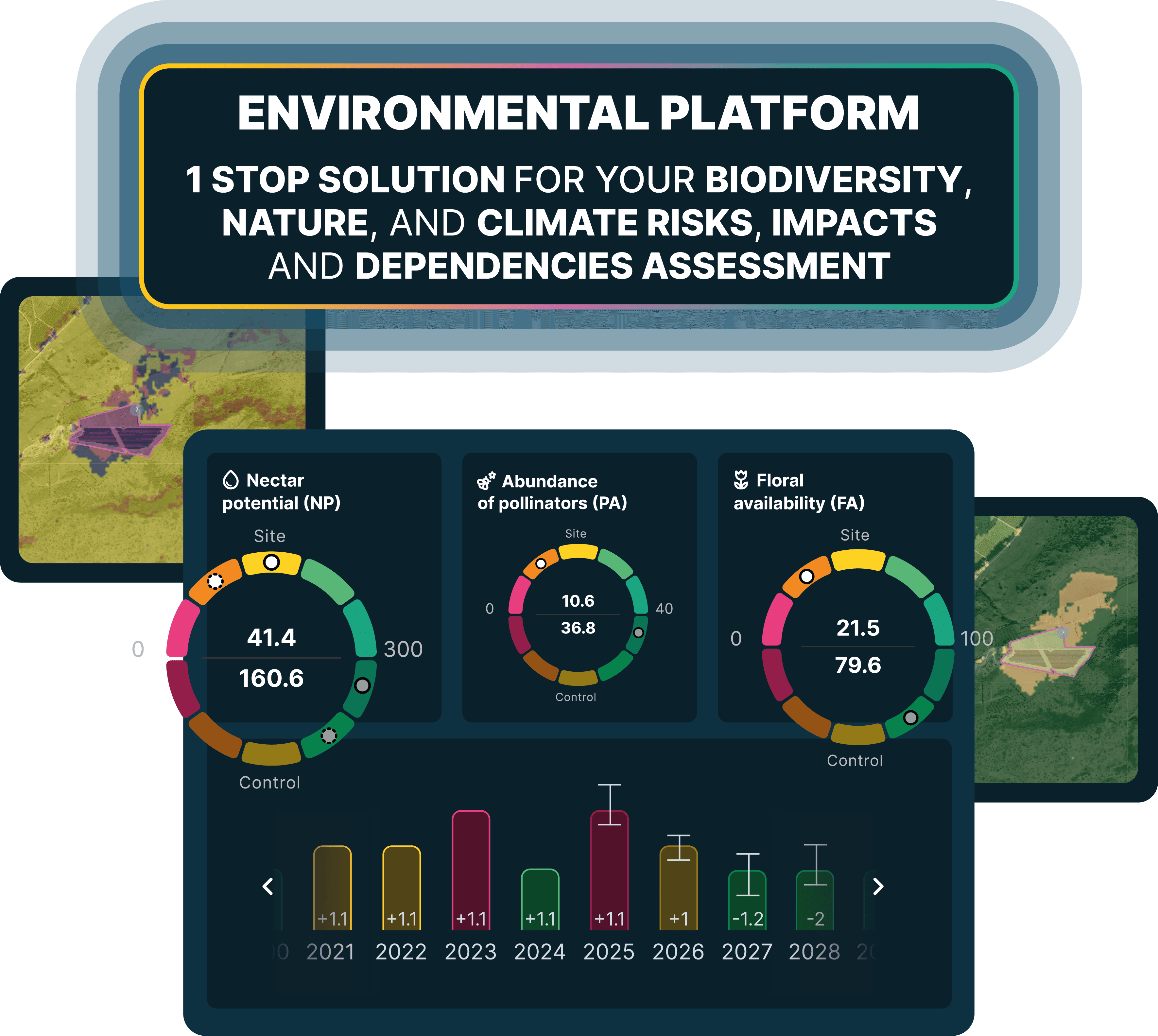
Key sections of the XNatura Environmental Platform dedicated to monitoring AGM Inks sites.
Biodiversity status
MSA Land Use indices, site-control comparison, Natural Patches and analysis of the ecological potential of corporate sites and surrounding territory.
Hive-Tech
Data from the technological apiary: colony health status, environmental parameters and biomonitoring via Hive-Tech sensors installed in the oasis.
Land use
Land cover classification of corporate sites: sealed surfaces, green areas, nectariferous forest and agricultural land in the surroundings.
Hydrogeological risk
Flood risk analysis, erosion and assessment of the resilience of the territory surrounding corporate sites.
Access the XNatura Environmental Platform
The platform AGM Inks uses to monitor biodiversity at its sites and document the oasis impact over time.
Do you want to regenerate biodiversity at your corporate sites?
XNatura supports companies and production sites in creating biodiversity oases, with remote assessment, IoT sensors, plantings and continuous monitoring to document impact and support ESG reporting.
 Contact us for information about the platform or for specialized consulting in the environmental field.