From pilot project to global programme of biodiversity monitoring
Starting from the Ceriano Laghetto site, Bracco developed a biodiversity monitoring model now active across eight global facilities. The programme combines satellite analyses and local actions, operating according to the PDCA cycle and the principles of the mitigation hierarchy to ensure continuous improvement.
project
monitored
installed
Pharmaceuticals depend on nature, but impact its ecosystem services
The pharmaceutical sector impacts biodiversity primarily through the extraction and use of raw materials, water management and the modification of surrounding environments. The loss of pollinators, soil degradation and alteration of microclimates reduce the availability of natural resources essential for production and product quality. The sector depends on stable ecosystems for raw material supply, climate regulation, water filtration and quality, which ensure the continuity and sustainability of the pharmaceutical supply chain.
Building a data-driven global biodiversity strategy
Bracco had a robust ESG framework but lacked a structured biodiversity monitoring system at site level. Objective ecosystem data was needed to assess impacts.
A CSRD, TNFD and GBF-compliant approach was required, with MSA indicators and a scalable methodology replicable across all group facilities.
From the Ceriano Laghetto pilot to the global network
XNatura responded with a three-year programme: satellite assessment, IoT field monitoring and data integration into a single platform.
From pilot site to global strategy
A three-year programme combining satellite assessment, IoT sensors and an integrated platform to build a biodiversity monitoring network at international scale.
Evaluation of the Ceriano Laghetto pilot site
The project started in 2024 with a satellite assessment via Remote Sensing at the Ceriano Laghetto facility in Lombardy. Satellite images, processed with artificial intelligence algorithms, provided a comprehensive overview of biodiversity status across 45.5 hectares: land cover classification, MSA index calculation and identification of priority areas for field monitoring interventions.
Installation of 14 IoT sensors at Ceriano Laghetto
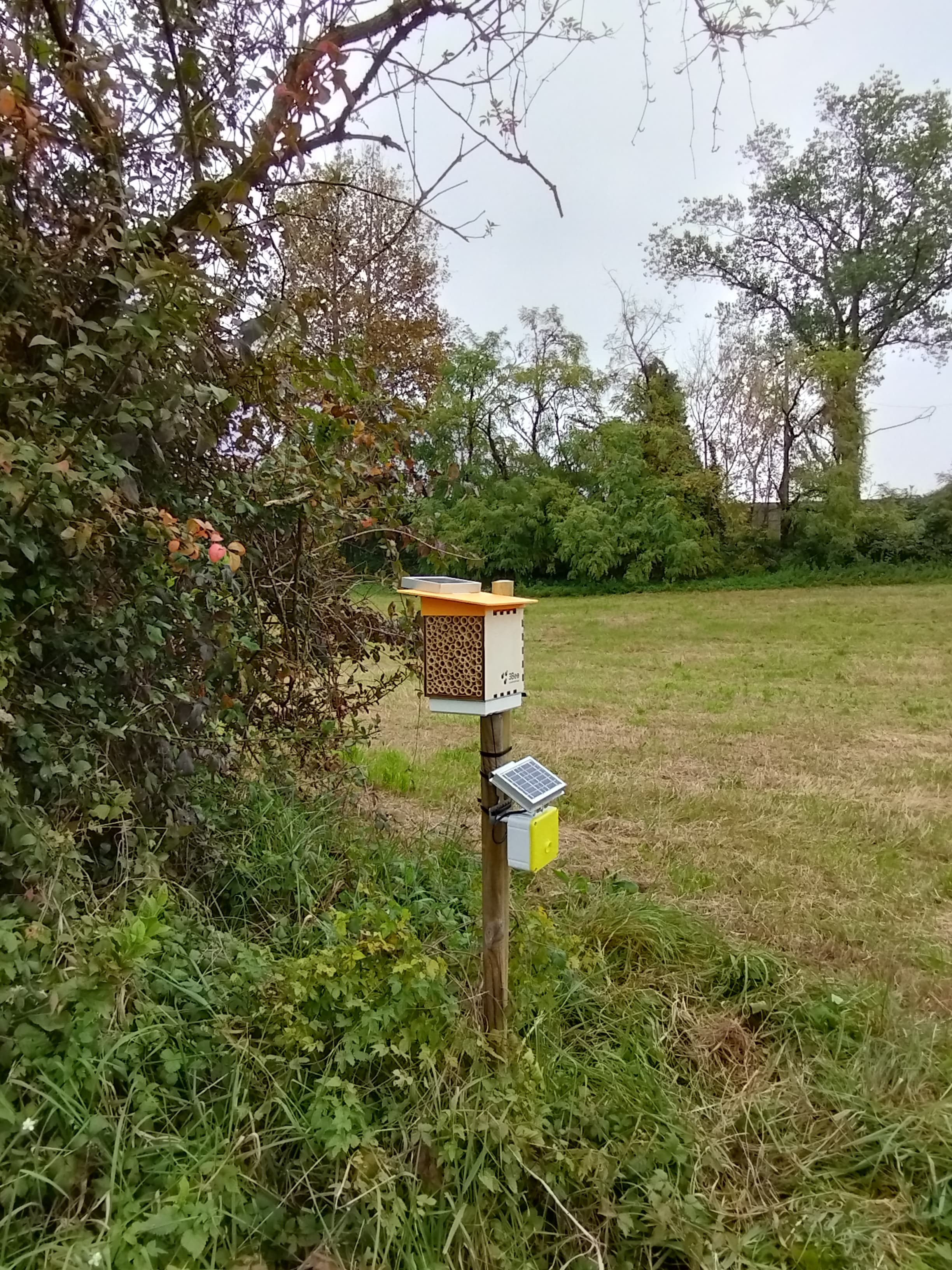
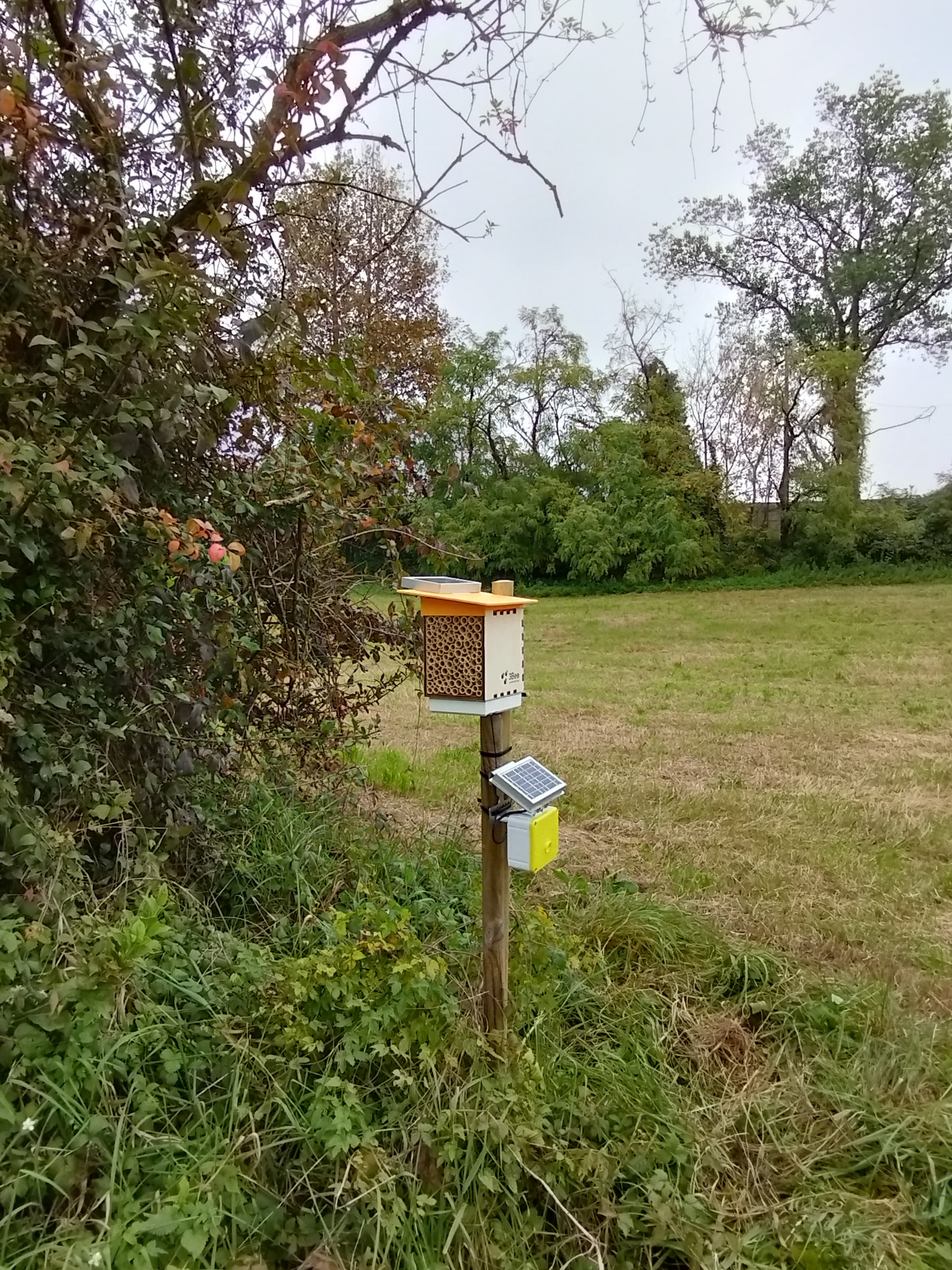
Based on the assessment results, 9 Spectrum bioacoustic sensors were installed for continuous pollinator census and 5 PollyX devices for environmental monitoring. The sensors detect bees, bumblebees and hoverflies by analysing sound waves, building a quantitative baseline on the abundance and diversity of species present in the green areas surrounding the facility.
Field interventions and data integration
In 2025 the pilot site is deepened with continuous monitoring, the development of a strategic Action Plan and the implementation of concrete interventions: educational trails, 5 pollinator shelters and informational panels for employee engagement. All data flows into the XNatura Environmental Platform with biodiversity, microclimate and environmental risk KPIs.
From 1 to 8 sites across 2 continents
The methodology developed at Ceriano Laghetto is being replicated across 7 new sites: Milan HQ, Colleretto Giacosa, Torviscosa, Geneva, Singen, Heerlen and Montreal. The goal is to build an integrated biodiversity protection strategy at global scale, with satellite assessment and a centralised platform for all Bracco Group facilities.
From monitoring to global strategy
surveyed
sites
identified
monitored
49 floristic species were surveyed and 25 at-risk species identified in the monitored area, providing a solid quantitative baseline for defining priority interventions. The collected data is compliant with TNFD and CSRD frameworks and supports Bracco Imaging's ESG reporting, which achieved the EcoVadis platinum medal with an environmental score of 91/100. The Ceriano Laghetto methodology is now being replicated across the other 7 Group sites on 2 continents.
Monitoring in action
Key sections of the XNatura Environmental Platform dedicated to Bracco sites.
Site visualization
Interactive map of 49 global sites with environmental indicators, MSA index and biodiversity status for each location.
Temperature and risks
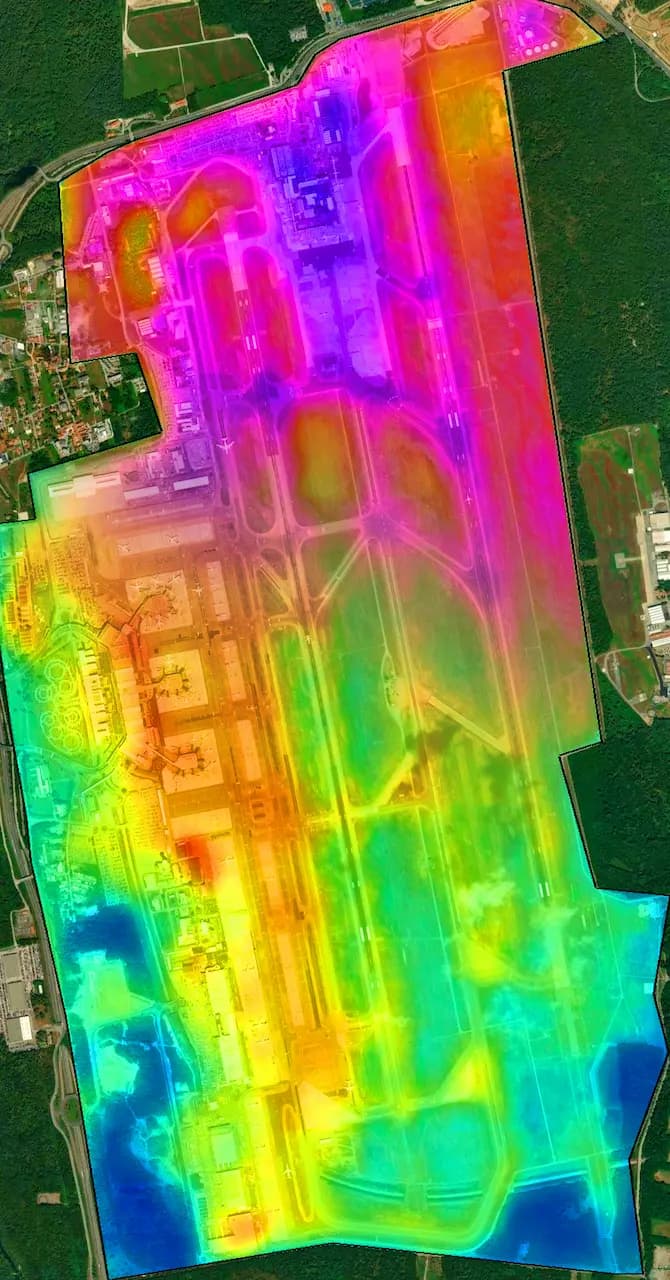
Land surface temperature, aridity, hydrogeological risk and microclimatic parameters of the Ceriano Laghetto site and surrounding areas.
Hydrogeological Risk
Hydrogeological risk analysis of the area: landslides, erosion, floods and site vulnerability assessment.
Spectrum Census
Data from Spectrum bioacoustic sensors: census of Diptera, Hymenoptera and Coleoptera, with abundance and diversity analysis over time.
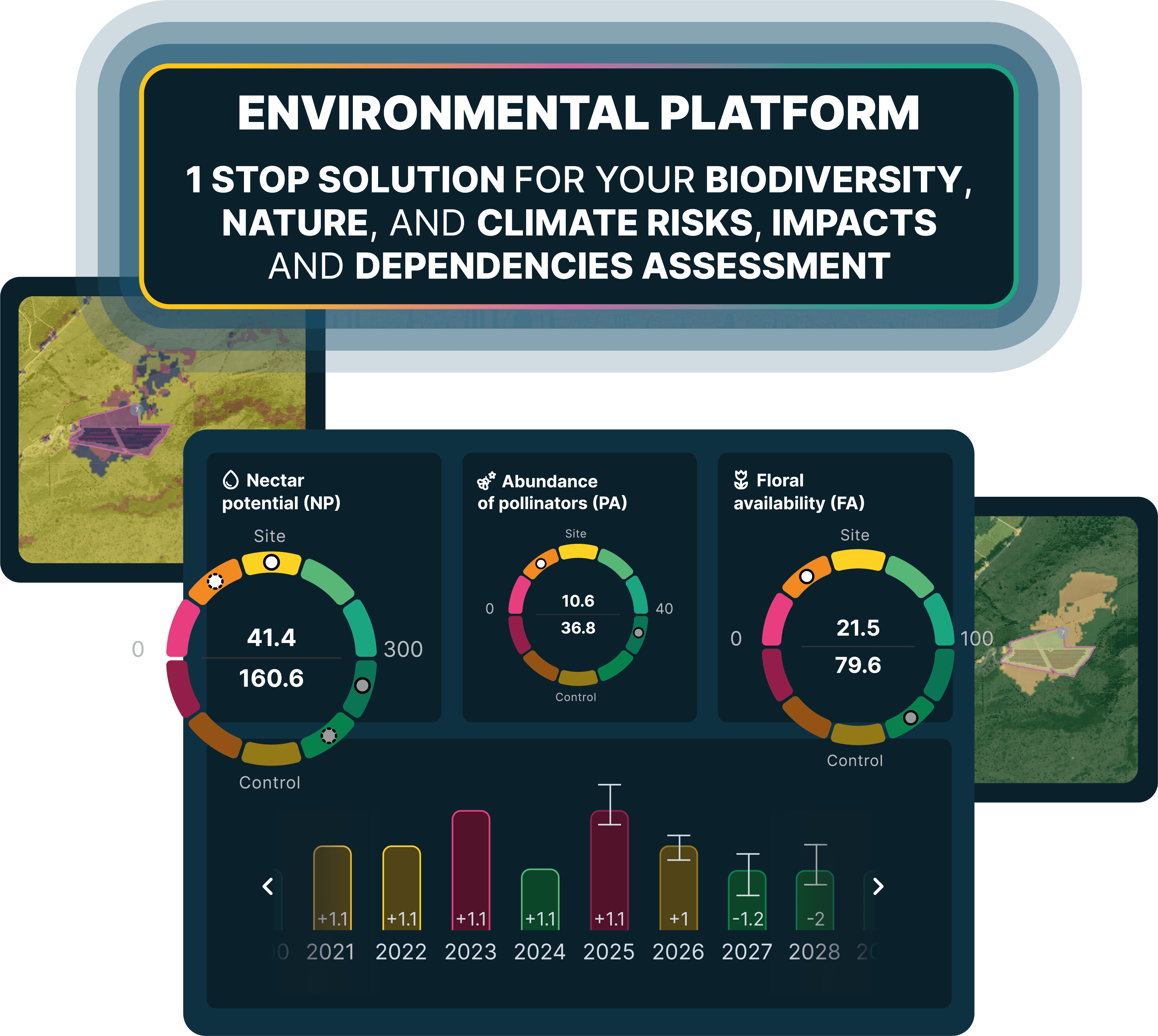
Access the XNatura Environmental Platform
The platform with which Bracco monitors biodiversity, microclimate and environmental risks across 8 production sites on 2 continents.
Want to monitor biodiversity at your industrial sites?
XNatura supports industrial companies in monitoring biodiversity at global scale, with satellite assessment, IoT sensors and a platform compliant with major reporting standards, from CSRD to TNFD.
 Contact us for information about the platform or for specialized consulting in the environmental field.