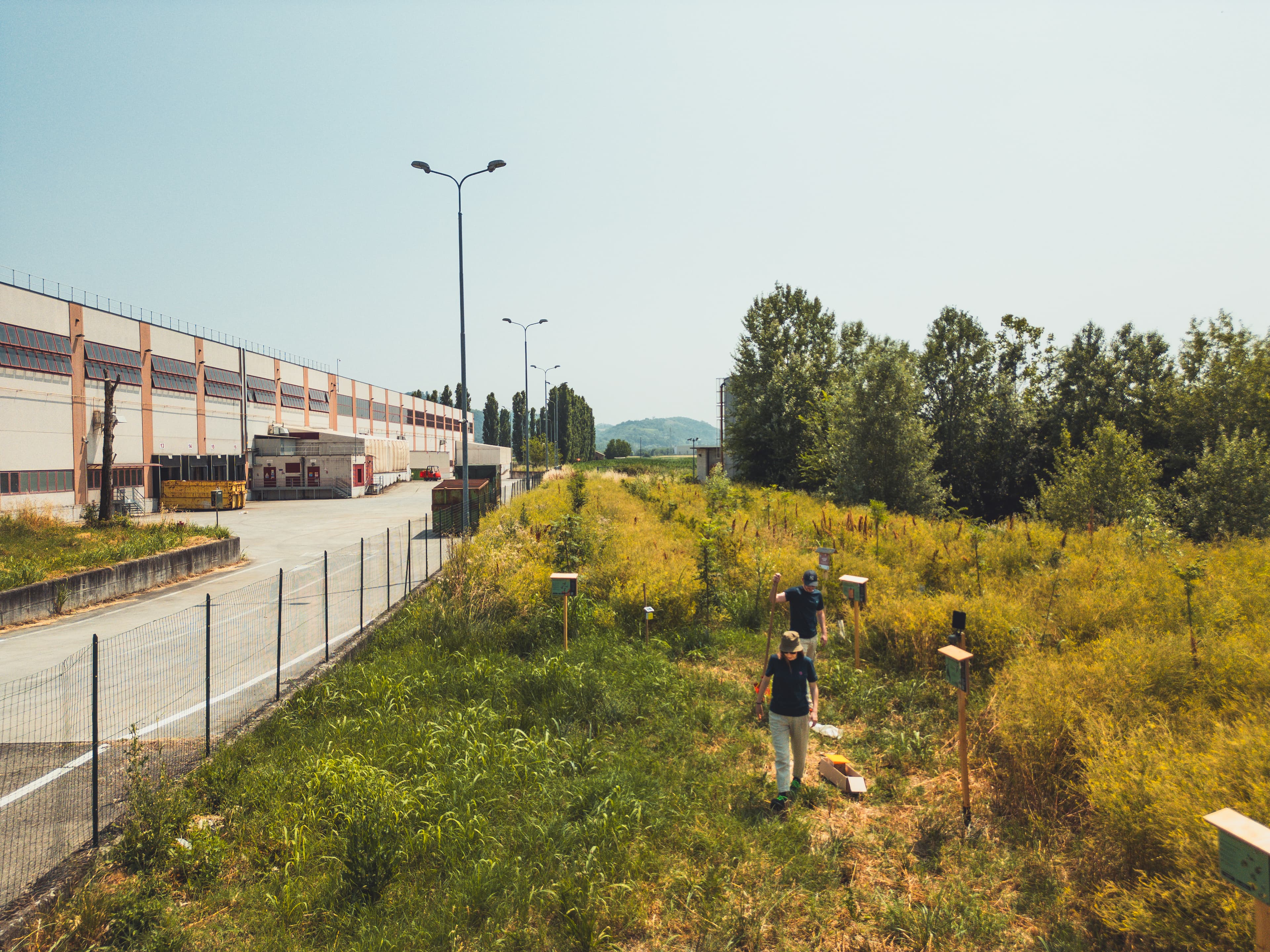
From facility space to monitored Biodiversity Oasis
The project began with an assessment of the Od+ logistics warehouse site at San Cipriano Po, with the aim of evaluating the area's biodiversity status. The creation of the Biodiversity Oasis started shortly after, with soil remediation of an area of approximately 0.5 hectares and the planting of 200 nectar-bearing trees and sowing of nectar meadow. Today, the active regeneration intervention and the entire facility are monitored in real time through the environmental platform and IoT sensors, integrating active employee participation with objective scientific data.
project
monitored
installed
Industrial soil is an ecological debt that can be transformed
Industrial sites impact biodiversity through the occupation of large surfaces, habitat fragmentation and the reduction of vegetation cover, even in partially unused areas. Species loss and soil degradation compromise the natural absorption of water, amplify heat islands and alter air quality. The sector depends on intact ecosystems for water regulation, soil stability and mitigation of local climate effects, which support the functionality and resilience of industrial areas.
Measurable data, real engagement, compliant reporting
OD+ had an area at San Cipriano Po, for which it wanted to generate a positive impact on biodiversity at the corporate level.
It needed to make sustainability tangible for employees: field training and direct involvement in the oasis.
Remediation, regeneration and technology to monitor nature
XNatura responded with a four-year programme: regeneration, technology and people engagement.
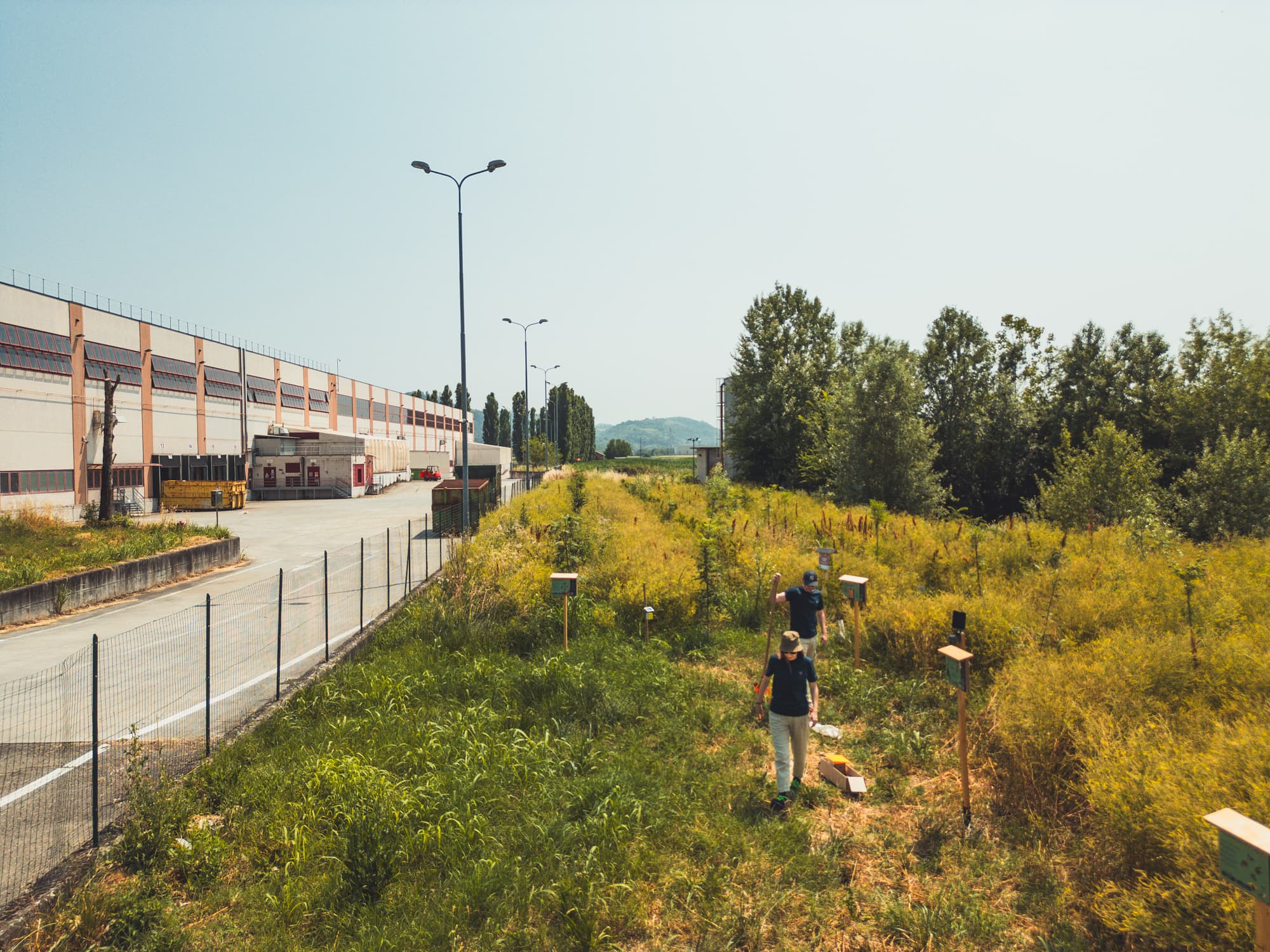
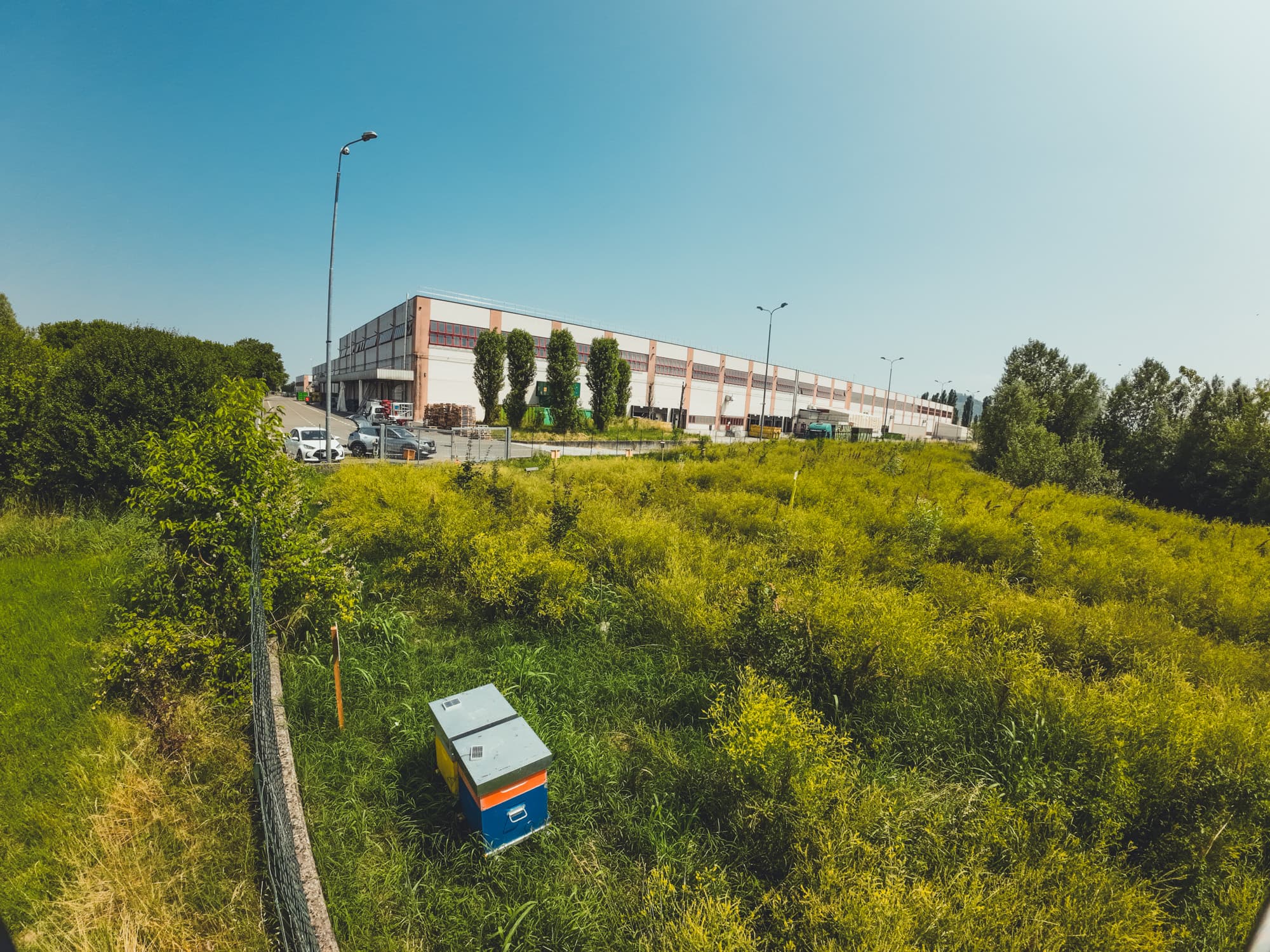
From unused space to Monitoring Oasis
A four-year project addressing OD+'s needs through technology, data and people engagement.
The Biodiversity Oasis
The project began with an assessment of the Od+ logistics warehouse site at San Cipriano Po, with the aim of evaluating the area's biodiversity status. The creation of the Biodiversity Oasis started shortly after, with soil remediation of an area of approximately 0.5 hectares and the planting of 200 nectar-bearing trees and sowing of nectar meadow. Today, the active regeneration intervention and the entire facility are monitored in real time through the environmental platform and IoT sensors, integrating active employee participation with objective scientific data.
4 IoT devices for multi-level monitoring
In the regenerated area, 4 proprietary XNatura IoT devices were installed, each dedicated to a specific monitoring level: 1 Spectrum sensor for bioacoustic pollinator detection, 1 PollyX for constant particulate monitoring (PM 2.5 and PM 10) and air quality, and 2 Hive-Tech applied to hives to collect data on weight, temperature, humidity and sound activity of the colonies, using the bee as a bioindicator.
XNatura dashboard active across the entire 6.9-hectare area
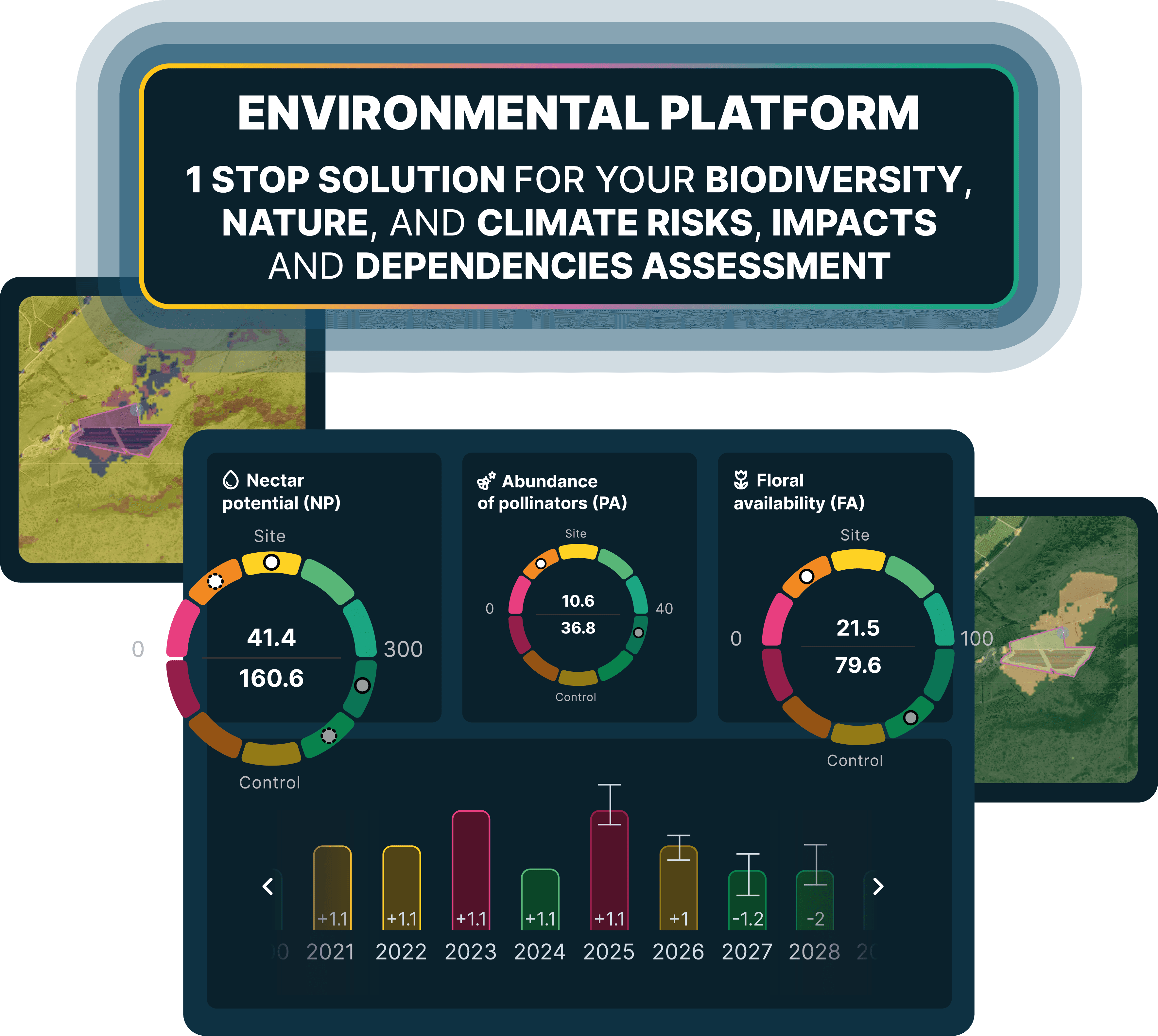
Data from the 4 sensors flows into the XNatura Environmental Platform, which integrates them with satellite analyses and AI algorithms. Monitoring covers the entire site area (6.9 hectares), not just the regenerated portion, allowing evaluation of the interventions' impact on the surrounding ecosystem. OD+ has a dedicated dashboard with indicators on biodiversity, air quality, climate risk and microclimate, compliant with TNFD, GRI and SBTN frameworks, directly integrable into the corporate ESG strategy.
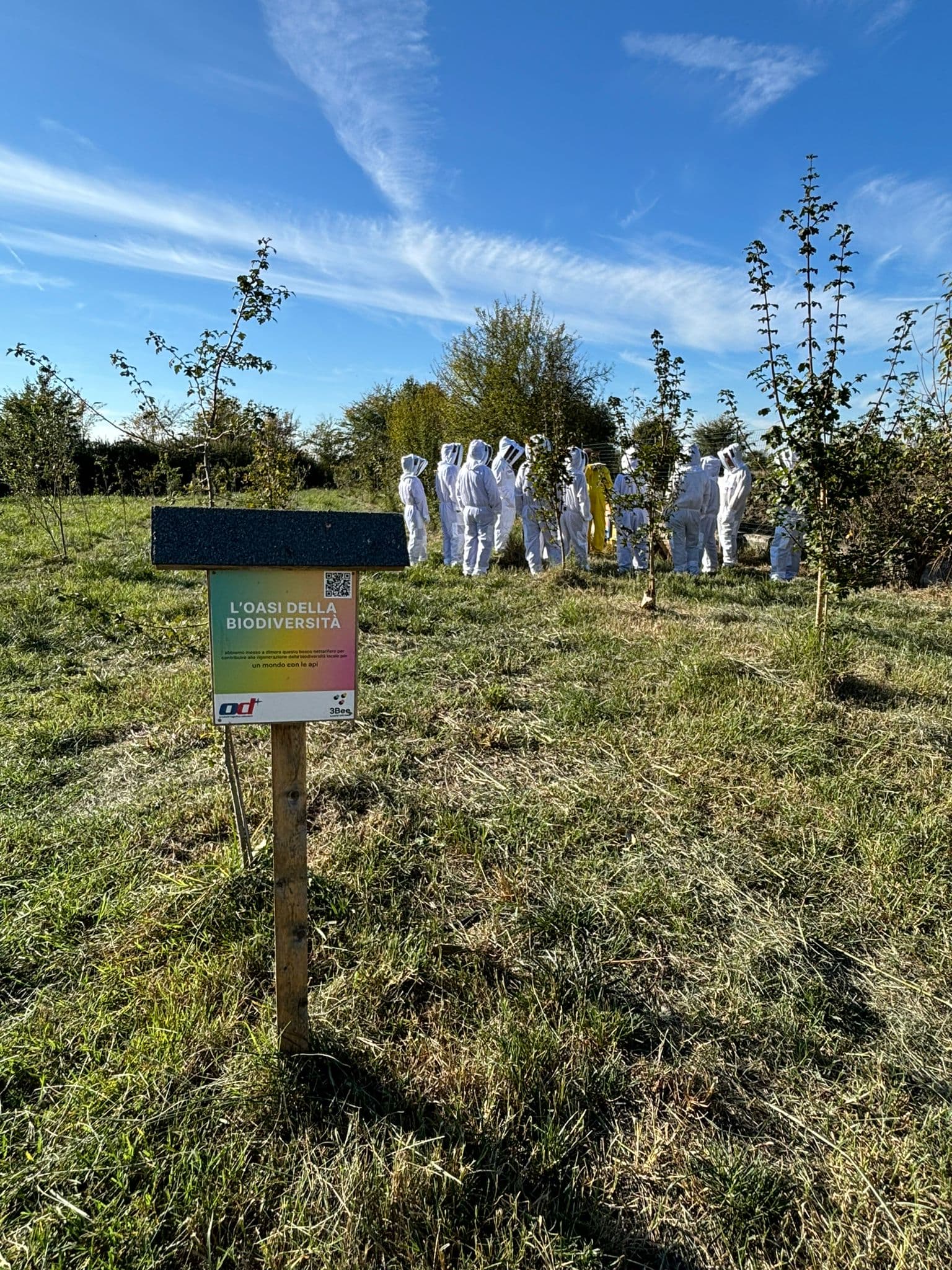
Beekeeper for a Day: sustainability becomes corporate culture
The Beekeeper for a Day programme engaged Od+ employees in a practical training day on the world of bees, beekeeping and the role of pollinators as bioindicators.
Integrated reporting and monitoring expansion
Comprehensive impact assessment with certified reports integrable into OD+'s ESG strategy and compliant with TNFD and GRI frameworks. The goal: consolidate measurable improvement in biodiversity and air quality indices and build a replicable model for other industrial and logistics sites in the group.
The monitoring data
monitored
monitored
identified
planted
The data reported here comes from the XNatura Environmental Platform and the 4 IoT devices installed in the area. The 410 pollinators were detected by the Spectrum sensor through bioacoustic analysis and classified into 19 distinct clusters, confirming that the regenerated area is becoming a functional habitat for wild species.
The project addressed OD+'s initial needs on all fronts: a multi-level monitoring system producing KPIs integrable into ESG reports, a platform compliant with TNFD and GRI frameworks, and an engagement pathway that made employees protagonists of their facility's environmental transformation.
Monitoring in action
Key sections of the XNatura Environmental Platform dedicated to the OD+ project.
Biodiversity Status
Area biodiversity indices: land use, natural habitat coverage, Mean Species Abundance (MSA) and Key Biodiversity Areas.
Monitored Pollinators
Data from the Spectrum sensor: classification by cluster and frequency, seasonal trends in pollinator abundance and diversity.
Air Quality
Data from the PollyX sensor: PM 2.5 and PM 10 particulate levels, constant air quality monitoring in the industrial area.
Microclimate
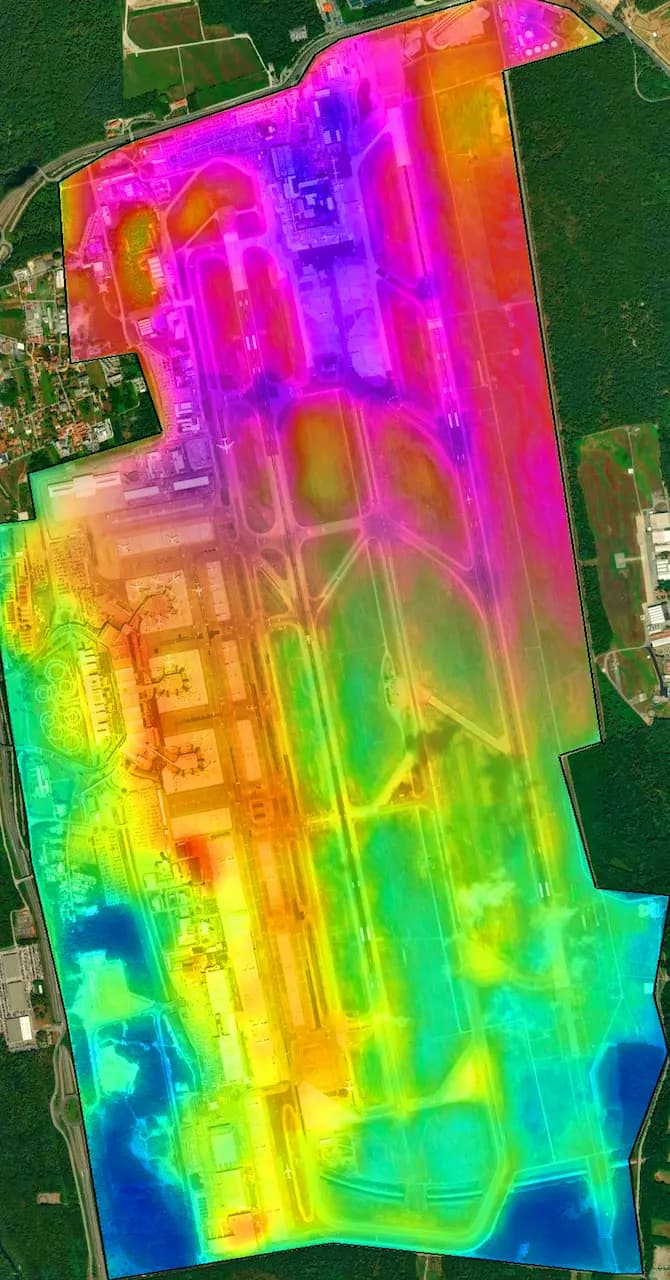
Microclimatic variations in the area: temperature, humidity, heat islands and environmental parameters to assess the impact of regeneration.
Access the XNatura Environmental Platform
Register to discover how our technology can support your company in assessment, monitoring and environmental regeneration.
Want to monitor your site's biodiversity and engage your employees?
XNatura supports companies across all sectors in projects combining environmental regeneration, technological monitoring and people engagement, with measurable results compliant with major reporting frameworks.
 Contact us for information about the platform or for specialized consulting in the environmental field.