
Multi-SiteApplicabilityExploration
How to conduct a multi-site assessment on the XNatura platform
The XNatura platform has been designed to support two different types of environmental assessment, adaptable to your specific analytical needs: the Multi-Site Assessment, which allows simultaneous analysis of numerous physical assets for rapid site prioritization, and the Site-Specific Assessment, which offers a much greater level of detail on a single asset. In this guide, we will explore in detail the multi-site assessment. We will discover which metrics it analyzes and how to navigate through them, including through demo videos that will guide you step by step in the exploration.
What is a multi-site assessment?

The Multi-Site Assessment is an environmental analysis methodology conducted remotely on a variety of physical assets simultaneously. The primary objective of this type of analysis is to facilitate quick and homogeneous comparison between sites that may be located in very different geographical areas. This comparison is not an end in itself, but serves a crucial strategic objective: site prioritization. The XNatura platform efficiently and quickly identifies assets that are: Thus, the Multi-Site Assessment provides a high-level view necessary to direct resources and decide which sites deserve a subsequent and more in-depth Site-Specific Assessment.
In what cases is it useful to conduct a multi-site assessment?

The Multi-Site Assessment is the ideal tool for organizations that manage a large network of physical assets or operate within a complex and widespread value chain globally. When a company owns numerous sites (for example, different production facilities located in multiple countries) or relies on a high number of geographically distributed suppliers, it is essential to conduct a quick and effective environmental screening. This screening serves to immediately identify: In scenarios with a large number of assets to evaluate, the Site-Specific analysis becomes too detailed and time and resource-intensive to apply to all. The Multi-Site Assessment was created to overcome this limitation, providing an overview of the corporate portfolio or supply chain. This high-level strategic view is essential for building targeted action plans, allowing budget and resources to be directed towards the sites that emerge as most critical or at higher risk. Subsequently, and only after this preliminary analysis, it becomes useful to conduct an in-depth Site-Specific Assessment on the limited number of sites that the multi-site analysis has identified as priorities.
How to explore the Multi-Site Assessment Interface?

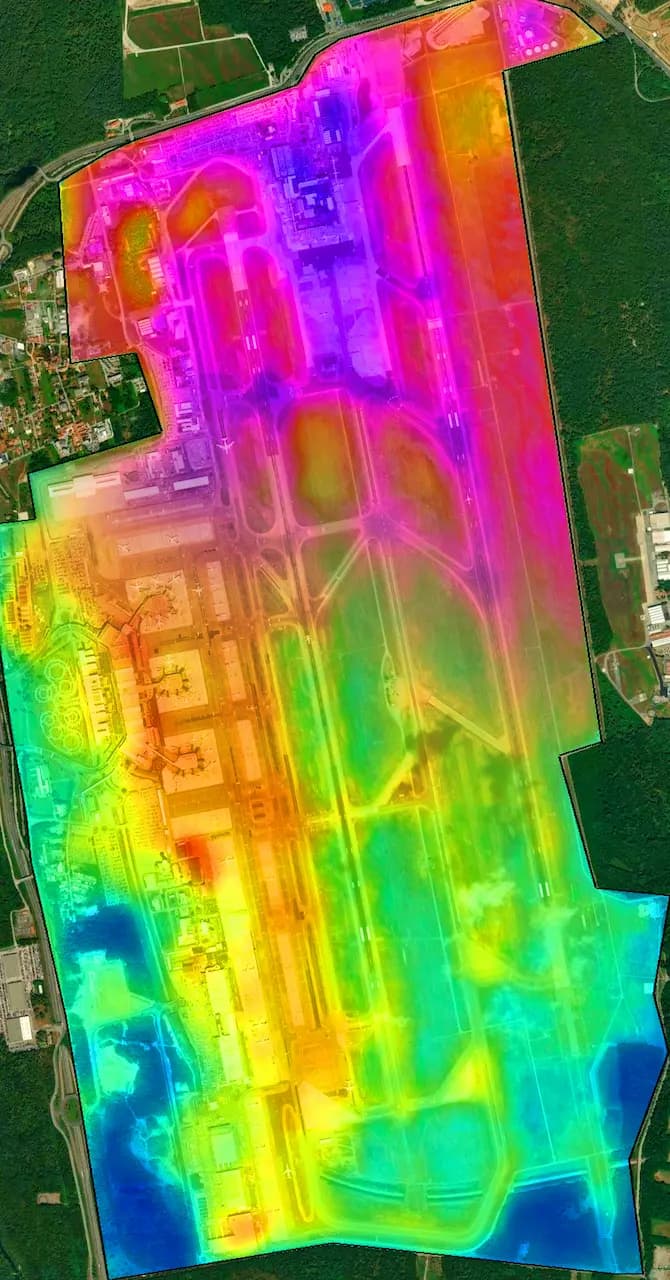
The demo video illustrates the interface of the platform dedicated to the Multi-Site Assessment, designed to provide a clear and immediate overview of your asset portfolio. All analyzed assets are geolocalized on a satellite map. The platform offers the flexibility to view different sets of sites: you can select owned sites (direct assets), upstream sites (suppliers), and downstream sites (distribution), or view the entire network simultaneously. The key to visual prioritization lies in the color coding associated with each site, which ranges from green (low risk/impact) to red (high risk/impact). This color coding can be applied to a wide range of KPIs that are viewable directly on the map, ranging from biodiversity metrics such as MSA (Mean Species Abundance) and Naturalness, to physical risk indicators such as flood risk and aridity. The platform provides a summary overview that indicates, through intuitive dashboards, the exact number of sites involved and the overall distribution of impacts, dependencies, and risks across the entire portfolio. A key analysis tool is the Prioritization Matrix, which allows users to cross-reference two selected environmental variables (e.g., climate risk vs. MSA). The distribution of sites within this matrix helps to immediately identify those that are located in the upper right corner. These sites represent those prioritized for monitoring and intervention, as they present the highest level of criticality for both variables at play. To complete the analysis, it is also possible to download an automated report containing all the results of the multi-site assessment.
Companies that have chosen XNatura
A35 BrebemiIlaria Napoli - Sustainability Manager
We are monitoring the impact of our assets on biodiversity, improving it through regeneration efforts such as the creation of our Oases, and increasing our impact by raising awareness among local students.
Read more
Argor HeraeusAngelo Rizzella - Sustainability Manager
With XNatura we are able to assess the impact of our clients, such as mines, on local ecosystems, understanding the levels of biodiversity degradation.

Parco delle Groane e della Brughiera Briantea
We are proud and happy to lead this important project as Parco delle Groane e della Brughiera Briantea, which once again sees us collaborating with leading Italian universities and organizations that have long been active in our region. Biodiversity is essential for our planet, and its loss is one of the most urgent emergencies we must address today.
Read more
Cassa Centrale
Together with XNatura we are protecting and monitoring biodiversity through the Oases of the Cassa Centrale - Credito Cooperativo Italiano Group, where our goal is to promote projects that protect the natural environment and biodiversity.
Read more
Harting
Through our collaboration with XNatura, we have deployed technological solutions to foster respect for nature and the ecosystem, creating sustainable value for future generations.

Mutti
The issue of biodiversity has always been central to the strategies of Mutti, whose business revolves entirely around a product of the earth, a symbol of Made in Italy in the world: the tomato. Precisely for this reason, within our Green Strategy, we have initiated a program of ecosystem restoration and rehabilitation, which starts from the very land where we have our production facilities. The collaboration with XNatura is therefore essential for us, in order to give scientific validation to our projects and help us in building a long-term strategy that will help us grow and bring increasing value to the environment.
Read more
FoxyResponsabile Marketing e Comunicazione
We are proud to work alongside XNatura's 3Bee project to monitor and regenerate biodiversity in Europe. We started by monitoring honeybees and are expanding the project to regeneration. Through communication on Foxy Love the Bee products and to consumers, we can help spread this awareness and do our part for a more sustainable planet.
Read more
FindusInes Teixeira - Head of Marketing Veg Southern Europe
With XNatura, we are monitoring about 1.000 hectares of our supply chain aiming to understand the level of biodiversity and its relationship with our farms.

Leone AlatoIgor Boccardo - CEO
We decided to give priority to the natural capital of the Group by monitoring 16k ha. We are developing a long-term strategy to enhance the ecosystem services of our assets in collaboration with Generali Country Sustainability & Social Responsibility.
Read more
Cherry BankMaddalena Ganz - Responsabile Marketing e Comunicazione
Respect is one of the core values of Cherry Bank's governance. This world is what we all have in common. Creativity, sensitivity, and innovation are needed to find a balance between new needs and respect for Nature's resources. It’s not the trees that will save the planet, but humankind.
Read more
CubicoDavide Romano - Head of Operations
We are deeply committed to protecting biodiversity and integrating sustainability into our projects. Our initiatives support wildlife, agriculture, and regenerative efforts, to create long-term impacts for a more sustainable future.
Read moreDiscover XNatura
XNatura focuses on the digitalization of nature, integrating artificial intelligence, IoT sensors, satellite technologies, and cloud computing. The goal is to collect, process, and analyze environmental data to support companies, public entities, and natural parks in monitoring and managing risks and impacts on nature, biodiversity, and climate change.
Data Analytics
AI Nature Specialist
IoT & Nature
Satellite Map Specialists
Do you have any doubts or questions?
Book 30 minutes
 Contact us for information about the platform or for specialized consulting in the environmental field.
Contact us for an environmental consultationContact us for information about the platform or for specialized consulting in the environmental field.