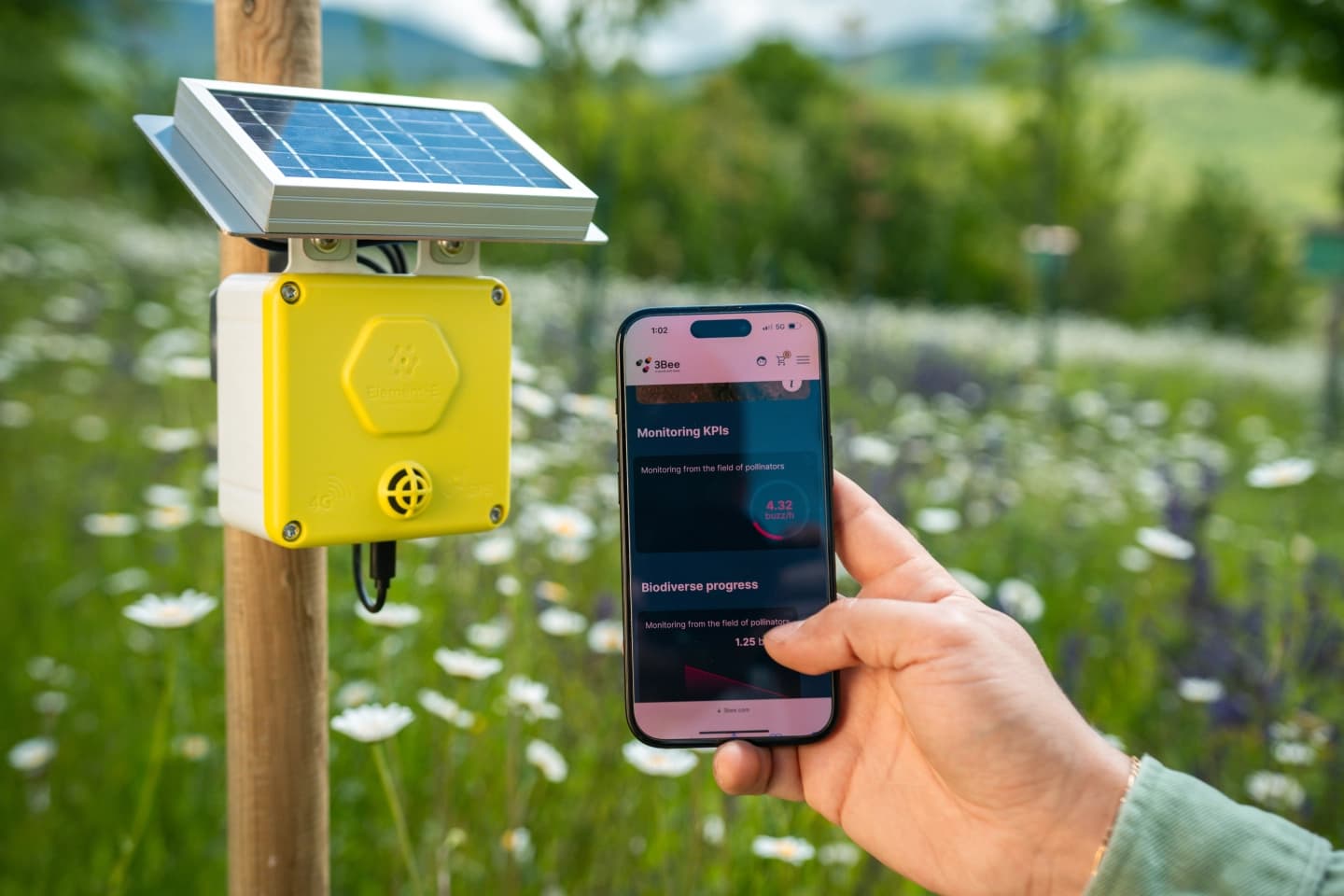
Kiro
Listen to the night
Bioacoustic sensor for bats
Kiro is the bioacoustic sensor that detects the presence of bats by listening to their ultrasound. Continuous, automatic and non-invasive monitoring of nocturnal biodiversity.
Keep me updated on the launch
Leave your email: we'll notify you at the launch on September 1, 2026.
Listen to the ultrasound from the field test
Bats orient themselves and hunt with ultrasonic pulses, largely inaudible to the human ear. Kiro records them and makes them visible and audible: that's the beauty of it, we can't hear them, but Kiro can.
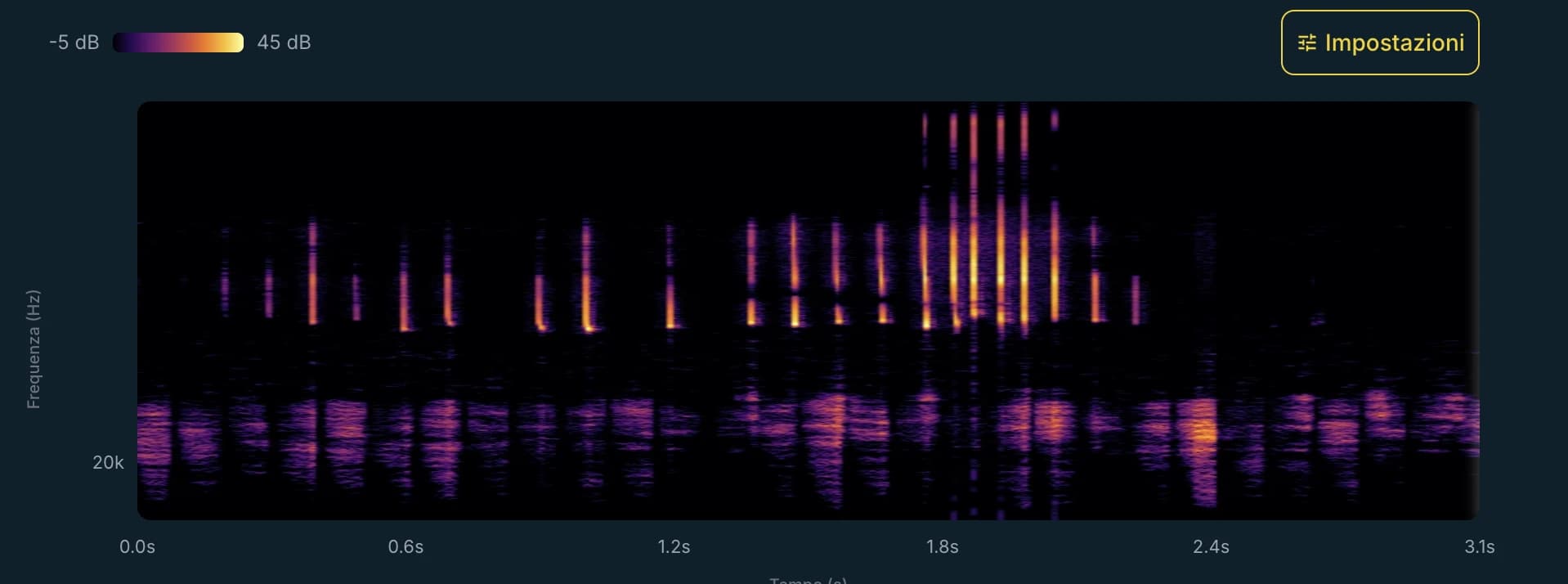
Listen to the ultrasound
- 0:36
- 0:36
- 0:36
- 0:36
What is Kiro
Kiro builds on the experience of 3Bee's bioacoustic sensors, Spectrum and Birdy. It is designed to monitor bats without any disturbance to the observed population: it listens, emits nothing and requires no technicians in the field.
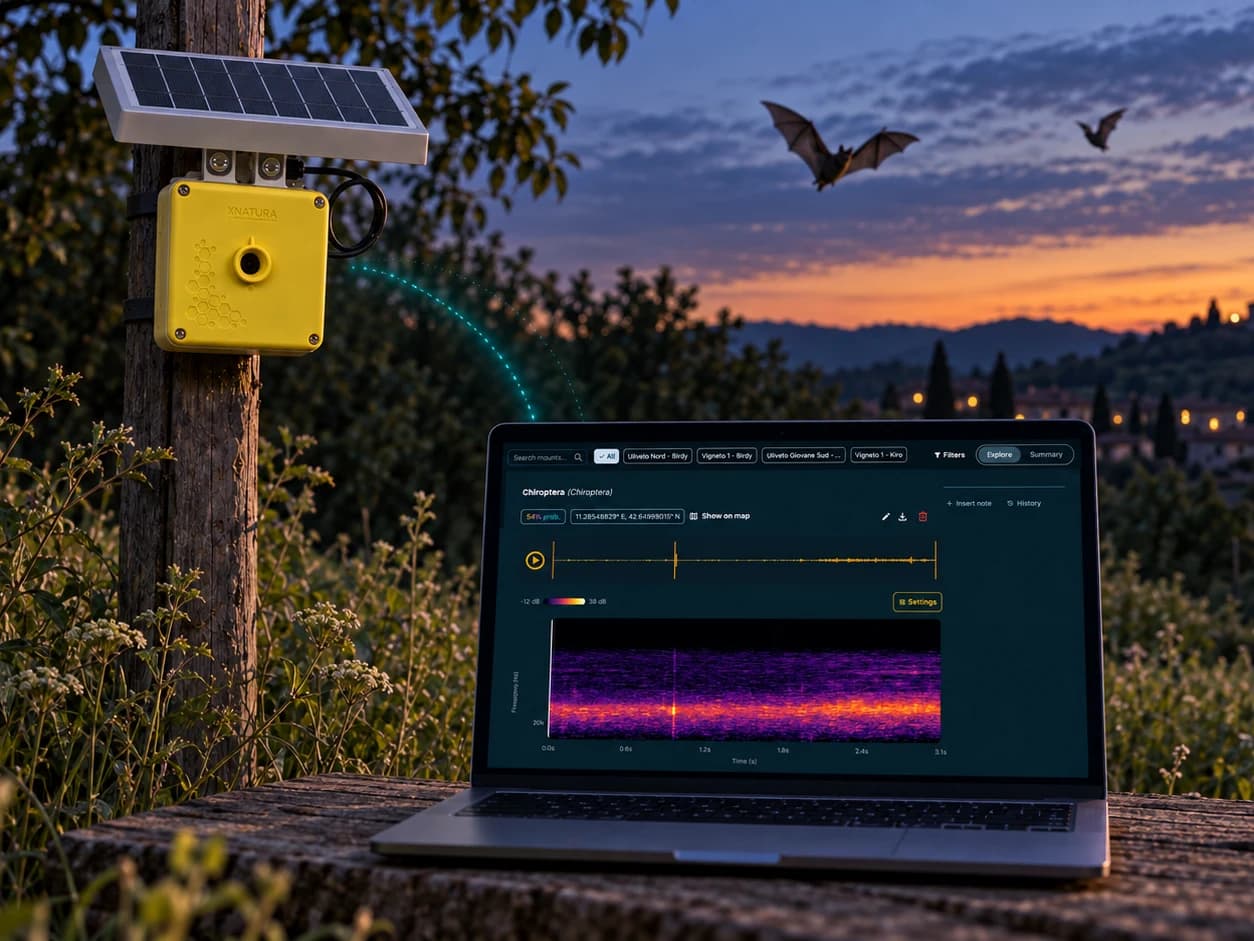
Why bats
Bats are among the best indicators of the health of biodiversity.
Bioindicators
Excellent indicators of the state of biodiversity: many Italian species are at risk (Red Lists).
Everywhere
Present in cities, countryside and natural environments, wherever there is food and shelter.
Natural control
Nocturnal insectivores: they feed on insects, including mosquitoes and agricultural pests (such as the brown marmorated stink bug), natural regulators of the ecosystem. Their presence signals the presence of insects.
Shelters
They live in natural cavities (trunks, caves) and urban environments: farmhouses, attics, bat boxes.
How It Works — Echolocation
Although they can see, bats orient themselves, move and hunt mainly thanks to echolocation (biosonar). They emit ultrasonic pulses that bounce off surfaces and come back, building a true acoustic image of the environment. Kiro "listens" to these pulses and detects the presence of bats passively and non-invasively.
01
Installation
The sensor is placed in the area to be monitored.
02
Pulse emission
Bats emit ultrasonic pulses to orient themselves and hunt in the environment.
03
Passive detection
Kiro detects the pulses passively, emitting nothing and never disturbing the population.
04
Real-time data
The data are accessible in real time on the XNatura platform dashboard.
Key Features
Unlike other sensors that count individuals, Kiro is automatic and real-time: that is its strength.
Ultrasound bioacoustics
Detects bats through their biosonar, passively and non-invasively.
24h solar autonomy
Integrated solar panel that recharges the sensor: continuous operation day and night.
Real-time data
Multi-operator SIM for continuous data transmission to the XNatura platform.
Zero disturbance
No technician in the field: the monitored population is never disturbed. Fully automatic.
Technical specifications
- 4 m
- Installation height
- 24h solar
- Power supply
- Multi-operator SIM
- Connectivity
- Ultrasound
- Detection
Need an environmental consultant right away?
Don't wait for the launch. If you have an active project or a biodiversity monitoring need, tell us about it: we'll get back to you right away and set up a dedicated path with one of our environmental consultants.
Kiro in the field
Images from the field test in agricultural and semi-natural environments.
Launch Timeline
The path leading to the official launch of Kiro, on September 1, 2026.
Today
Field test
Field test in agricultural and semi-natural environments.
Summer 2026
Waitlist open
We're opening the waitlist: leave your expression of interest and be among the first to receive Kiro at launch.
September 1, 2026
Official launch
Official launch of Kiro, available for purchase.
Future
Kiro 2.0
Species recognition.

We already had the foundations with Spectrum and Birdy. With Kiro the challenge is the leap from audible sound to ultrasound: a field with very few studies and libraries. It's the most fascinating challenge for our technical team.
Frequently Asked Questions
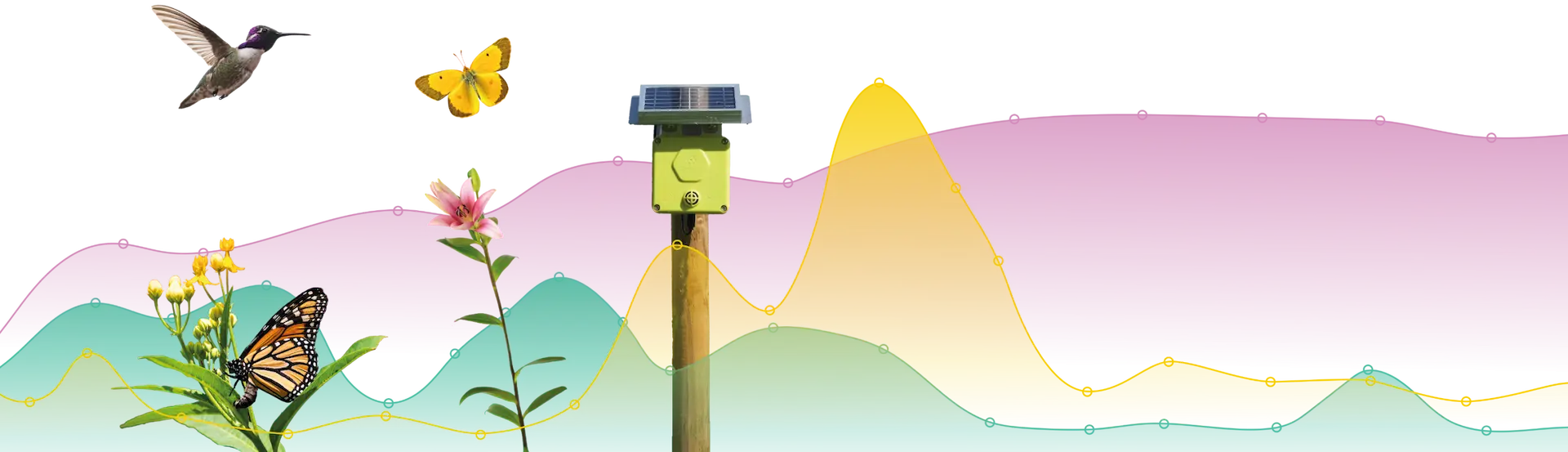
Want to be among the first to monitor bats with Kiro?
Leave your email: we'll keep you updated at the launch on September 1, 2026.