









Case study · Industry
Can a waste facility regenerate biodiversity ?
Scapigliato transformed its waste management facility in Rosignano Marittimo into a cutting-edge environmental monitoring site, with 10 IoT devices across 179 hectares, satellite analysis and data linked to TNFD and GRI metrics.

Waste pollution is among the main drivers of biodiversity loss
Waste management impacts biodiversity through leachate that contaminates soils and groundwater, emissions that alter air quality and waterproofing that destroys and fragments habitats. The dispersion of pollutants in terrestrial and aquatic ecosystems alters food chains and ecological processes; pollution is identified by IPBES as one of the main drivers of biodiversity loss. The sector depends on ecosystems capable of filtering, degrading and naturally regulating contaminants.
The challenge
Measuring whether the site is improving or declining from an ecological perspective
The challenge was the lack of objective scientific data on the site's ecological evolution. Without a baseline, it was impossible to tell if biodiversity was improving. A continuous monitoring system was needed to measure ecological progress and integrate biodiversity into strategy with KPIs linked to TNFD and GRI metrics.
What we did
A three-year project integrating satellite, sensors and bioindicators
XNatura responded with a three-year project integrating satellite, IoT sensors and biomonitoring beehives.
In the field


How we did it
From satellite to field
A three-year project starting from satellite analysis to the densest network of bioacoustic sensors ever installed at a single industrial site.
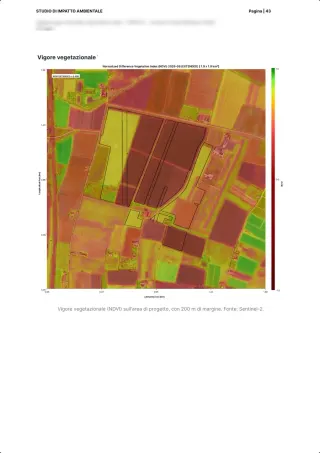
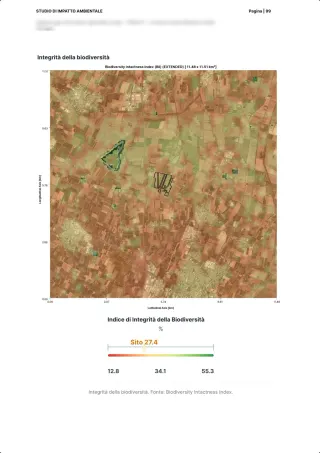
- 01Remote Sensing and satellite analysisThe project began with satellite analysis covering 179 hectares. The analysis mapped vegetation cover, land use, floral availability and habitat suitability, comparing the facility with neighbouring control areas to define the site's ecological baseline.
- 028 Spectrum sensors at the facility8 Spectrum sensors were strategically deployed across the facility, creating the densest bioacoustic network for a single industrial site. Each sensor detects and classifies wild pollinators through sound analysis, producing continuous data on species abundance and diversity. The monitoring generates continuous data on classification, abundance and seasonal trends of pollinators.
- 032 beehives as ecological sentinelsTwo sensor-equipped beehives were installed at the facility as biomonitoring tools. Bees, as bioindicator organisms, provide data on the environmental quality of the surrounding area. The sensors detect temperature, humidity, weight and colony sound activity, completing the monitoring system from satellite to field.
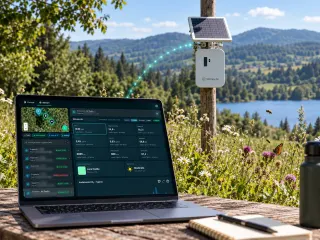
- 04XNatura platform for integrated dataAll data flows into the XNatura Environmental Platform: satellite analysis, bioacoustic readings from the 8 Spectrum sensors and data from the biomonitoring beehives. Scapigliato has a dashboard with indicators on biodiversity, natural coverage, habitat suitability and pollinator activity, all linked to TNFD and GRI metrics.
- 05Biodiversity strategy and territorial projectsConsolidation of three-year data into a biodiversity strategy that also uses them for TNFD reporting. The Scapigliato model could become a reference for the waste management sector, demonstrating that scientific biodiversity monitoring is possible and measurable even in the most complex industrial contexts.
What the data says
The monitoring data
The data comes from the XNatura Environmental Platform and the 10 IoT devices installed at the "Factory of the Future" facility. The 8 Spectrum sensors detected 5,025 pollinators through bioacoustic analysis, classified into 18 distinct clusters providing a detailed picture of species diversity and abundance in the area.
There are 3 protected areas within 5 km of the site, confirming the ecological value of the context in which the facility operates. The 2 Hive-Tech beehives directly monitor 120,000 bees, used as bioindicators of environmental quality in the area. This data constitutes the scientific baseline for measuring ecological improvement over time and guiding future intervention strategies.
Monitoring in action
Monitoring in action
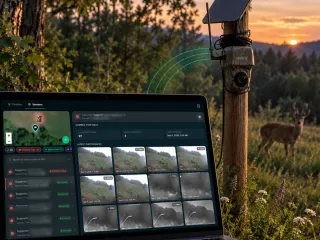
Key sections of the XNatura Environmental Platform dedicated to the Scapigliato project.
The platform
Access the XNatura Environmental Platform
The platform with which Scapigliato monitors biodiversity, pollinators and environmental quality at the "Factory of the Future" facility.
Log in to the platform →
FAQ
Frequently asked questions
What was the environmental challenge at Scapigliato?
Waste pollution is among the main drivers of biodiversity loss. Waste management impacts biodiversity through leachate that contaminates soils and groundwater, emissions that alter air quality and waterproofing that destroys and fragments habitats. The dispersion of pollutants in terrestrial and aquatic ecosystems alters food chains and ecological processes; pollution is identified by IPBES as one of the main drivers of biodiversity loss. The sector depends on ecosystems capable of filtering, degrading and naturally regulating contaminants.
What method did XNatura use at Scapigliato?
A three-year project starting from satellite analysis to the densest network of bioacoustic sensors ever installed at a single industrial site.
What data came out of the Scapigliato project?
The data comes from the XNatura Environmental Platform and the 10 IoT devices installed at the "Factory of the Future" facility. The 8 Spectrum sensors detected 5,025 pollinators through bioacoustic analysis, classified into 18 distinct clusters providing a detailed picture of species diversity and abundance in the area. There are 3 protected areas within 5 km of the site, confirming the ecological value of the context in which the facility operates. The 2 Hive-Tech beehives directly monitor 120,000 bees, used as bioindicators of environmental quality in the area. This data constitutes the scientific baseline for measuring ecological improvement over time and guiding future intervention strategies.
What access does Scapigliato have to the XNatura platform now?
The platform with which Scapigliato monitors biodiversity, pollinators and environmental quality at the "Factory of the Future" facility.
Want to monitor biodiversity at your industrial site?
XNatura supports companies across all sectors in scientifically rigorous environmental monitoring projects, with proprietary IoT technology, satellite analysis and reporting with metrics linked to major frameworks.
Want to monitor biodiversity at your industrial site?
XNatura supports companies across all sectors in scientifically rigorous environmental monitoring projects, with proprietary IoT technology, satellite analysis and reporting with metrics linked to major frameworks.
More in Industry
 AGM Inks · IndustryMonitoring and regeneration of biodiversity at corporate sitesRead the case study
 Argor-Heraeus · IndustryFrom Mendrisio to Colombia, biodiversity is measured on a global scaleRead the case study
 Bracco · IndustryFrom pilot project to global programme of biodiversity monitoringRead the case study