





ImagesAvailable
Camera traps: Observe the Wildlife
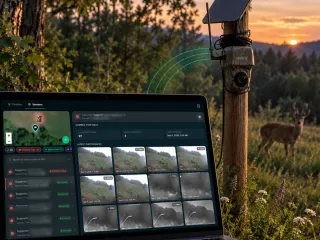
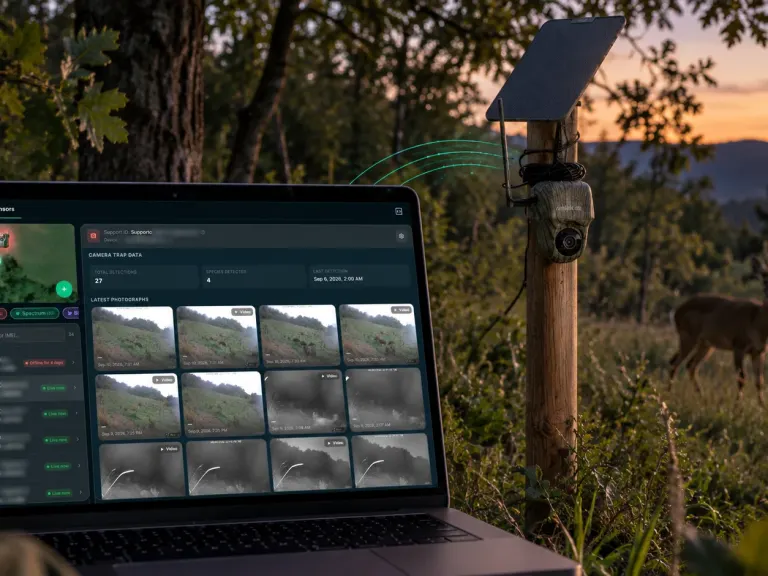
Our trail cameras capture images and videos of wildlife 24/7, enabling non-invasive and scientifically accurate census.
Field sensors
- 4K Ultra HD
- Resolution
- 0.2 seconds
- Trigger
- 20 meters
- IR Range
01 / 04
Automated wildlife census
XNatura trail cameras use PIR sensors and night vision to document the presence of mammals, birds, and other wildlife.
02 / 04
Technology Platform Camera traps
Designed for continuous wildlife monitoring. Advanced technology for non-invasive biodiversity census.
- 01
Advanced Capture System
High-sensitivity PIR sensor; 4K Ultra HD video resolution; Trigger time under 0.2 seconds; Species recognition via AI - 02
Field Operation
Invisible IR night vision up to 20m; Battery life up to 6 months; Weather-resistant camouflage design; 4G connectivity for remote transmission
03 / 04
Key features
Advanced technologies for professional wildlife monitoring.
- 01
4K resolution
High-resolution images and videos for accurate identification of species and individuals. - 02
Motion activation
High-sensitivity PIR sensors with a trigger time of less than 0.2 seconds. - 03
IR night vision
Invisible infrared LEDs to capture nighttime images without disturbing animals. - 04
AI species recognition
Machine learning algorithms for automatic identification of captured species.
04 / 04
How it works
The wildlife monitoring process with our camera traps.
- 01
Strategic positioning
The camera traps are installed along ecological corridors and passageways. - 02
Motion detection
PIR sensors detect animal movement and trigger recording. - 03
Automated analysis
Images are analyzed by AI to identify species and behaviors. - 04
Biodiversity report
Dashboard with statistics on species, frequencies, and behavioral patterns.
From the field · south-east Piedmont, Italy
Who walked past the camera traps in south-east Piedmont, Italy
23,880 videos and 23,685 photos from 14 camera traps between January 2026 and September 2026. Seven mammals confirmed by an ecologist; each clip is the original, cut to a few seconds.
- 23,880
- videos
- 23,685
- photos
- 14
- camera traps
Roe deer
Capreolus capreolus
95 detections · 10 confirmed
Wild boar
Sus scrofa
80 detections · 2 confirmed
Red fox
Vulpes vulpes
42 detections · 3 confirmed
European badger
Meles meles
37 detections · 3 confirmed
Crested porcupine
Hystrix cristata
12 detections · 1 confirmed
Grey wolf
Canis lupus
6 detections · 2 confirmed
Real platform data, exported on September 23, 2026. The clips are the sensors' original recordings, cut to a few seconds and levelled in volume, nothing else.
Field sensors
Technical specifications
Technical details of camera traps for wildlife monitoring applications.
- Resolution
- 4K Ultra HD
- Trigger
- 0.2 seconds
- IR Range
- 20 meters
- Autonomy
- 6 months
- Active devices
- 50+
- Wildlife observations
- 3.5K+
- Video resolution
- 4K
How to get it
The device comes with an offer from our team
We do not sell sensors from a price list. The team puts together an offer for your project: how many sites and devices, what has to be monitored and for how long, and the subscription to the XNatura platform that turns the readings into species lists, maps and exports.
Field sensors
Gallery
Camera traps in the field.


In the platform
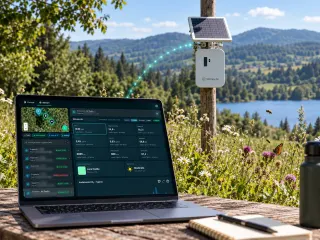
What the data looks like once it is in XNatura
Every reading lands in the site's digital twin, next to the satellite layers and the surveys, and reads as a chart, not as a file.

In the field
Projects where Camera traps is already installed
Case studies whose story names this sensor: what it was asked to measure, and what came out of it.

FAQ
Frequently asked questions
Do camera traps disturb animals?
No, our camera traps use infrared LEDs invisible to animals. Recording is completely non-invasive, without flashes or sounds that could disturb the wildlife.
How long does the battery last?
The autonomy depends on the frequency of recorded events. On average, the batteries last about 6 months with moderate activity. For long-term installations, solar power options are available.
How is the data transmitted?
Models with cellular connectivity automatically send the images to the cloud. Standard models store data on an SD card that is periodically retrieved by our technicians.
Which species can be detected?
Camera traps can detect any animal large enough to trigger the PIR sensors: mammals of all sizes, terrestrial birds, and in some cases reptiles. Wolves, foxes, deer, boars, and badgers are among the most common species.
What is Camera traps?
Our trail cameras capture images and videos of wildlife 24/7, enabling non-invasive and scientifically accurate census.
How does Camera traps work?
Automated wildlife census. XNatura trail cameras use PIR sensors and night vision to document the presence of mammals, birds, and other wildlife.
What are the technical specifications of Camera traps?
Resolution: 4K Ultra HD · Trigger: 0.2 seconds · IR Range: 20 meters · Autonomy: 6 months · Active devices: 50+ · Wildlife observations: 3.5K+ · Video resolution: 4K
Discover the wildlife in your area
Contact us to implement camera traps in your wildlife census projects.