









Resources / FAQ / Standards & assessments
Resources · FAQ · Standards & assessments
Environmental Impact Assessment (EIA): what it is, when it is needed, and what XNatura's role is
We explore the fundamental aspects of the Environmental Impact Assessment (EIA), an administrative and technical procedure aimed at identifying, describing, and evaluating the effects that a project can have on the environment and human health. Let's see how the XNatura platform provides support in carrying out an environmental impact assessment.
The full page, with a report to browseEIA software and studies, section by section The platform and the experts on a real environmental impact study, with the durations and outcomes of the Italian MASE catalogue.Questions & answers
What is the Environmental Impact Assessment (EIA)?
The Environmental Impact Assessment (EIA) is not just an administrative procedure, but a real integrated decision-making process aimed at ensuring that economic development is compatible with the protection of natural capital. It is a multidisciplinary study that proactively analyzes the direct and indirect effects that the realization of a work can generate on the ecosystem and public health. Unlike other environmental certifications, the EIA focuses on prevention: its purpose is to identify environmental criticalities before they occur, allowing designers to modify the intervention or to integrate corrective measures already in the technical design phase. Among the elements analyzed by the EIAs, we have: Physical and chemical factors: analysis of air quality, noise pollution, soil stability, and the safeguarding of water resources (surface and underground). Biological factors: study of habitat fragmentation, protection of local species, and conservation of existing biodiversity. Human and landscape factors: assessment of visual impact on the landscape, protection of cultural heritage, and socio-economic consequences on local communities. Resilience to climate change: evaluating how the work will interact with future climate scenarios (e.g., heat waves or extreme weather events), an area where digital modeling becomes essential.
When is the EIA required?
The EIA is mandatory for projects that, by nature, size, or location, may have significant impacts on the environment. Regulations (such as the European Directive 2011/92/EU and national transpositions) indicate specific categories: Strategic infrastructures: highways, railways, ports, and airports. Energy plants: power plants, large wind or solar farms. Industrial sector: refineries, chemical plants, or steelworks. Resource management: large dams, quarries, or waste disposal plants.
What is XNatura's role in the EIA?
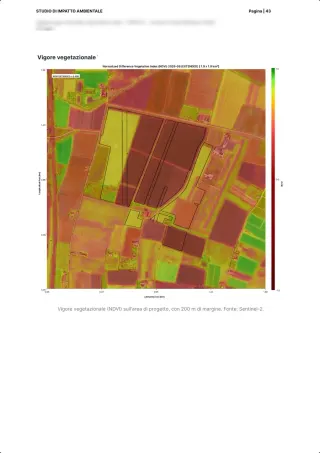
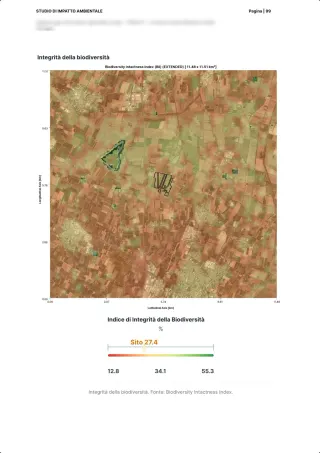
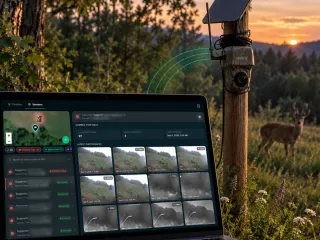
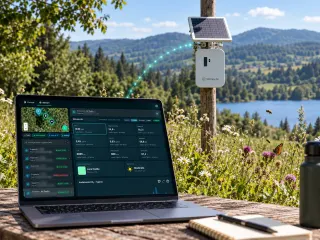
Traditionally, the EIA requires long field survey campaigns and documentary analyses. XNatura simplifies and speeds up this process through remote analysis of satellite data (remote sensing) and the use of artificial intelligence, making the assessment quicker, more precise, and consistent over time. A. Baseline analysis (pre-operation state). Before building, it is necessary to know the current state of the site. XNatura instantaneously provides: Land cover mapping: thanks to satellite data, it is possible to define, with high accuracy, the current land use and numerous related environmental metrics. Biodiversity metrics: through the MSA (Mean Species Abundance) indicator, XNatura establishes a scientific baseline of the ecological quality of the area, which is fundamental data for EIA reports. B. Risk screening and prioritization. Using the multi-site assessment, companies that need to choose between different locational options (design alternatives) can: Compare multiple areas simultaneously. Identify sites with lower ecological sensitivity or lower physical risks (floods, landslides, heat waves). Select the option that minimizes environmental impact already in the pre-feasibility phase. C. Impact simulation (post-operation scenarios). The Scenarios section of XNatura is a powerful tool for technicians drafting the EIA: Prediction: it simulates the loss of natural land cover due to the project. Quantification: it automatically calculates the negative "delta" (impact) on environmental KPIs, such as carbon storage capacity or availability of nesting sites for pollinators. D. Monitoring and mitigation. Unlike traditional EIA, which often stops at approval, XNatura allows for continuous monitoring: Compliance verification: monitors whether mitigation measures (e.g., creation of new green areas) are actually delivering the expected benefits. The continuous support of our team of Nature experts also allows for the implementation of the most suitable mitigation measures for the area under analysis. IoT integration: if sensors are installed on-site, real-time data (air quality, presence, and variety of pollinators) integrate satellite analyses for continuous environmental monitoring during construction and operation phases.
Focus: post-approval environmental monitoring with XNatura
One of the most critical phases of the EIA is not just obtaining authorization but verifying that the actual impacts do not exceed those estimated and that the mitigation measures are effective. XNatura transforms this phase from a bureaucratic obligation into a strategic asset. Indeed, after approval, projects often foresee the creation of green barriers, habitat restoration, or planting of new areas. With XNatura, one can: Monitor growth: verify through satellite images the actual rooting of vegetation and the evolution of Land Cover over time. Measure biodiversity recovery: observe whether the MSA index starts to rise again thanks to the corrective actions taken. The integration of IoT sensors that transmit results directly to the platform allows for active surveillance through real-time monitoring data. The data collected can be easily exported into automated reports, ready to be shared with control authorities (ARPA/Ministry) or with the local community, demonstrating a concrete and transparent commitment to land protection.
See it live