









Case study · Energy
From former ash deposit to biodiversity laboratory
Scientific monitoring of biodiversity and pollinators across 33 hectares of the Dogaletto (VE) remediation site, within the protected area of the Venice Lagoon. The Nuova Alba project transforms a former industrial ash deposit from the Porto Marghera chemical hub into a scalable, data-driven ecological recovery model.

Pyrite ash within the Lagoon's protected area: residual contamination and fragile ecosystems
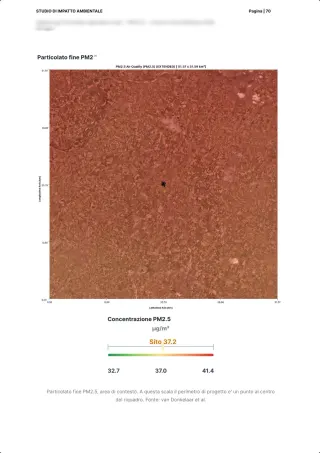
A pyrite ash remediation site within the protected area of the Venice Lagoon generates specific impacts: residual soil and groundwater contamination from arsenic, cadmium and heavy metals, pollutant release into the lagoon ecosystem through runoff, and disruption of the local trophic chain. Bioremediation itself depends on the site's ecosystem functionality: soil microorganisms, phytodepuration vegetation, hydrogeological stability. Ecosystem services that remain invisible without monitoring.
The challenge
Verifying whether remediation is producing real ecological recovery
Edison ReGeA was conducting bioremediation of the site but lacked scientific evidence of the actual state of biodiversity: was the site recovering ecological functionality, or was residual contamination continuing to degrade habitats? Objective data was needed to compare Dogaletto with the surrounding territory and demonstrate recovery over time with KPIs integrable into environmental reporting.
What we did
Nuova Alba Project: bioacoustics and satellite across 33 hectares
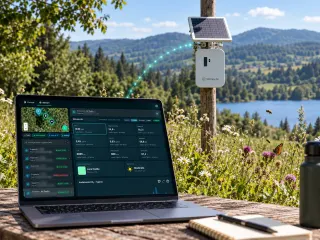
XNatura designed the Nuova Alba monitoring system to document the ecological recovery of Dogaletto, combining 5 Spectrum sensors positioned in different habitats with satellite analysis and site-control comparison.
In the field

How we did it
From remediation to Nuova Alba
A project integrating satellite analysis and bioacoustic sensor technology to document the ecological recovery of a remediation site within the protected area of the Venice Lagoon.
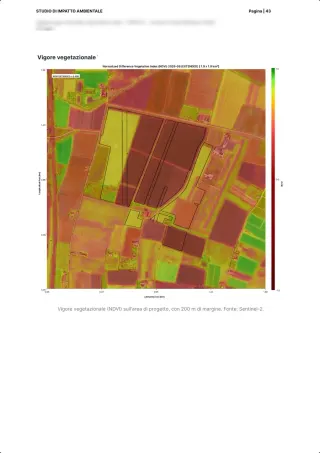
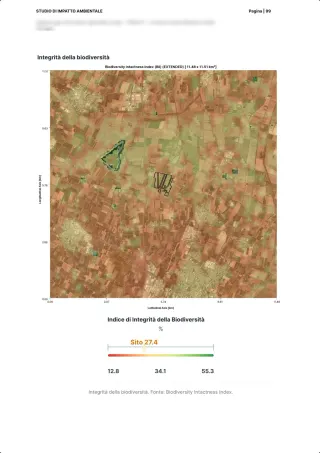
- 01Ecological assessment of the 33 hectares and the control areaSatellite analysis mapped the 33 hectares of the Dogaletto site and a control area, identifying 15.38 hectares of natural grasslands and broadleaf forests. The baseline produced biodiversity indices including MSA, nectar potential, land cover and hydrogeological risk, defining the starting point for ecological recovery monitoring.
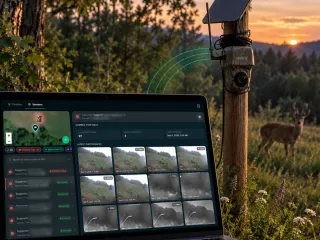
- 025 Spectrum for pollinator censusThe 5 Spectrum sensors were distributed across the site for continuous bioacoustic pollinator monitoring. The devices detect the diversity and density of entomofauna, producing data on the insect community establishing itself in the recovering area.
- 03Integration of satellite and bioacoustic dataSatellite data and Spectrum sensor data were integrated to produce the complete biodiversity picture of the site. The site-control comparison quantified the MSA Land Use delta between the remediation area and surrounding territory, measuring real ecological recovery.
- 04From the first site to a scalable modelData flows into the XNatura Environmental Platform, where Edison ReGeA monitors the biodiversity evolution of Dogaletto. The goal is to build a historical series documenting ecological recovery over time and develop a replicable model for other remediation sites within the Edison group.
What the data says
Data from the Nuova Alba site at Dogaletto
The 5 Spectrum sensors monitored 12,830 pollinators at the site, identifying 19 distinct clusters. Sensors positioned near the lagoon detected an average of 3,727 pollinators, compared to 446 from sensors near surrounding monocultures, demonstrating that proximity to natural habitats produces a radically different ecological response.
The site-control comparison reveals a delta of +14.90 on the MSA Land Use index: the site scores 56.7 versus the control area's 41.8. The remediation site shows higher biodiversity than the surrounding territory, achieving the first 3 out of 5 targets (Match Neighbor, Match Benchmark and Half Earth). The remaining 2 define the path for future regeneration.
Monitoring in action
Monitoring in action
Key sections of the XNatura Environmental Platform dedicated to Edison ReGeA's Nuova Alba project.
The platform
Access the XNatura Environmental Platform
The platform with which Edison ReGeA monitors the ecological recovery of the Dogaletto site and measures progress towards biodiversity targets with data comparable over time.
Log in to the platform →
FAQ
Frequently asked questions
What was the environmental challenge at Edison ReGeA?
Pyrite ash within the Lagoon's protected area: residual contamination and fragile ecosystems. A pyrite ash remediation site within the protected area of the Venice Lagoon generates specific impacts: residual soil and groundwater contamination from arsenic, cadmium and heavy metals, pollutant release into the lagoon ecosystem through runoff, and disruption of the local trophic chain. Bioremediation itself depends on the site's ecosystem functionality: soil microorganisms, phytodepuration vegetation, hydrogeological stability. Ecosystem services that remain invisible without monitoring.
What method did XNatura use at Edison ReGeA?
A project integrating satellite analysis and bioacoustic sensor technology to document the ecological recovery of a remediation site within the protected area of the Venice Lagoon.
What data came out of the Edison ReGeA project?
The 5 Spectrum sensors monitored 12,830 pollinators at the site, identifying 19 distinct clusters. Sensors positioned near the lagoon detected an average of 3,727 pollinators, compared to 446 from sensors near surrounding monocultures, demonstrating that proximity to natural habitats produces a radically different ecological response. The site-control comparison reveals a delta of +14.90 on the MSA Land Use index: the site scores 56.7 versus the control area's 41.8. The remediation site shows higher biodiversity than the surrounding territory, achieving the first 3 out of 5 targets (Match Neighbor, Match Benchmark and Half Earth). The remaining 2 define the path for future regeneration.
What access does Edison ReGeA have to the XNatura platform now?
The platform with which Edison ReGeA monitors the ecological recovery of the Dogaletto site and measures progress towards biodiversity targets with data comparable over time.
Do you want to measure the biodiversity of your remediation sites?
XNatura supports environmental operators, utilities and industrial companies in ecological recovery monitoring with IoT sensors, satellite mapping, site-control comparison and validated scientific protocols.
Do you want to measure the biodiversity of your remediation sites?
XNatura supports environmental operators, utilities and industrial companies in ecological recovery monitoring with IoT sensors, satellite mapping, site-control comparison and validated scientific protocols.
More in Energy


