










Resources / FAQ / Standards & assessments
Resources · FAQ · Standards & assessments
ISO 14054:2025 – Natural Capital Accounting for Organizations: standardizing the value of nature with XNatura
Let's take a closer look at the new ISO 14054:2025 standard, which sets out the principles and requirements for natural capital accounting in organizations, and see how the XNatura platform is the ideal tool to apply it.
Questions & answers
1. What is ISO 14054:2025 and why is it a turning point?
ISO 14054:2025 – "Natural capital accounting for organizations: principles, requirements and guidance" – is the international standard that gives organizations a structured framework for measuring, documenting, and communicating their impacts and dependencies on natural capital. This standard fills a regulatory gap, since until now many companies have struggled to account for nature in their financial statements. ISO 14054 closes this gap by defining how to identify natural assets, the stocks of resources (water, soil, biodiversity) the company depends on; measure the flows of ecosystem services, the benefits the company draws from nature (e.g. pollination, water purification); and make the data comparable, creating a common language for investors, regulators, and stakeholders.
2. What is natural capital accounting (NCA) for?
Implementing a natural capital accounting system under ISO 14054 lets an organization improve its decision-making, by understanding which assets are at risk from environmental degradation, meet the requirements of international frameworks such as CSRD and TNFD, and ultimately demonstrate the value it has created. This makes it possible to quantify not only costs, but also the value regenerated through biodiversity projects.
3. How does XNatura support you in implementing ISO 14054?
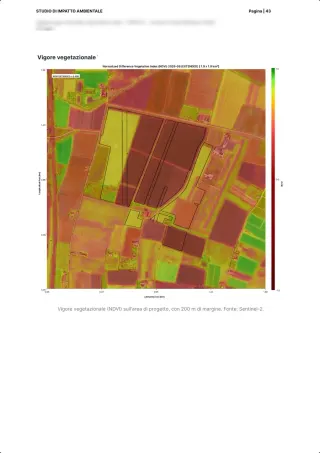
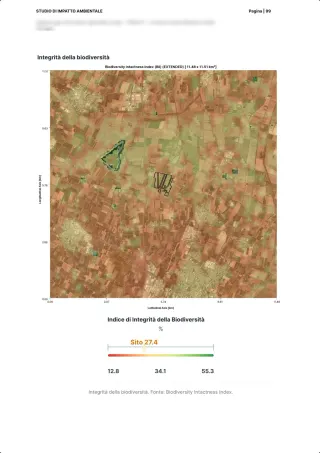
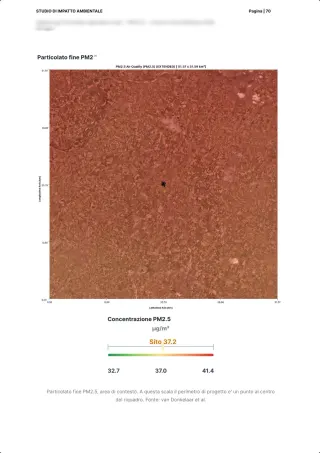
The XNatura platform is designed to turn the complex requirements of ISO 14054 into actionable data, supporting the entire accounting process through the following services. A. Asset identification and inventory (baseline): the standard requires mapping natural assets. Through remote sensing, XNatura lets you build a digital inventory of the site's Land Cover and measure the health of the natural stock using the MSA (Mean Species Abundance) index, providing the scientific basis for the accounting. B. Measuring climate and nature impacts and dependencies: ISO 14054 places emphasis on understanding how the company affects nature. Multi-site assessment scales natural capital accounting across hundreds of sites at once, identifying where impacts are most critical (site prioritization). Site-specific assessment quickly maps a company's impacts and dependence on ecosystem services. Ecosystem indicators: XNatura tracks specific layers such as carbon storage (Carbon Stock), hydrogeological risk, and the presence of pollinators, which represent the flows of ecosystem services the standard requires. C. Simulation and target setting (regeneration): in line with ISO's continuous-improvement requirements, XNatura's Scenarios section lets you simulate restoration interventions, estimate the resulting "gain" in natural capital in advance, and set Biodiversity Net Gain targets that become part of the organization's environmental balance sheet. D. Certifiable automated reporting: ISO 14054 requires rigorous documentation. The reports XNatura generates summarize environmental KPIs in a clear format, making it easier to align with the standard's guidance requirements and simplifying external auditing. Do you want to start accounting for your company's natural capital under ISO 14054:2025? Book a demo with our experts to see how XNatura can automate your Natural Capital Accounting process.
See it live