









XN Ecology · Monitoring
Ecological monitoring: the same points, before, during and after
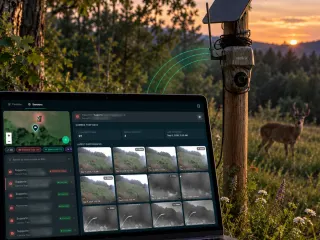
We measure the site before the works, during construction and after it, on the same points and against a control area: the sensors record continuously, our ecologists come back in the right seasons, and the report is redone at every campaign.

The rule
Monitoring is part of the authorisation
The EIA Directive, as amended in 2014, asks Member States to make sure the developer implements the measures of the decision and to set the procedures for monitoring the significant adverse effects; the parameters and the duration are proportionate to the nature, location and size of the project. In Italy it is Article 28 of Legislative Decree 152/2006.
- 1
Before the works
The state of the site before anything changes, on a grid of points and on a control area outside the project.
- 2
During the works
Field visits and sensors during construction, to see the effects as they happen.
- 3
After the works
Years of monitoring on the same points and indicators, with thresholds and corrective actions when they are crossed.
Sources: Directive 2014/52/EU amending Directive 2011/92/EU, Article 8a · Legislative Decree 152/2006, Article 28 (Italian)
What we measure
Sensors in production, ecologists in the field
We compared our monitoring with the monitoring documents of works subject to EIA on the Italian Ministry of the Environment's portal: the parts that make it a system are covered.
Covered
- The baseline on a grid of points and years of monitoring on the same grid
- The comparison with a control area outside the project
- Thresholds and corrective actions
- Periodic reports, georeferenced and time-stamped
- Birds with Birdy, pollinators with Spectrum, mammals with camera traps, PM2.5 and PM10 with PollyX
- Field surveys of flora, amphibians and the other groups, in their seasons
In part
- Bats: night activity recorded by Kiro sensors, still in field trials
- Noise and air stations: recorded and archived, not yet in the report
Stays with the developer and the authority
- The monitoring plan approved with the authorisation, and its changes
- The checks on the reports, by the authority in charge
On a real site
Before the panels
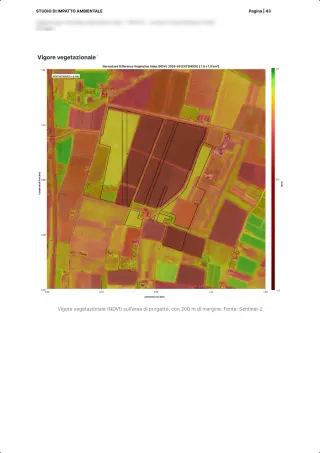
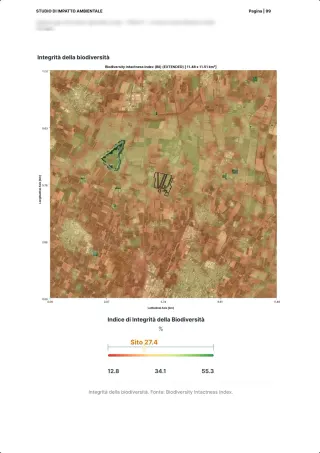
On three agricultural sites in Sicily meant for agrivoltaics, 176 hectares, we installed Spectrum sensors for RWE before the panels. The baseline gives an MSA land-use index of 44.5 on the sites against 61.7 in the control area, and about 2,975 pollinators in 17 clusters. The monitoring after construction will continue on the same points: there are no data after construction yet.
Example reports
See what you receive: real reports, anonymised
Deliverables our experts signed for real clients, with names, places and coordinates removed. Pick one, leave your details and download the PDF straight away.
Your report is ready.
Open it now; a strategist may follow up if it fits a project of yours.
Download the PDF ↓Our systems are temporarily unreachable and the request did not go through. Try again, or write to info@3bee.com.
FAQ
Questions on ecological monitoring
How long does the monitoring last?
As long as the authorisation asks: the EIA Directive wants it proportionate to the nature, location and size of the project and to its effects. The plan approved with the authorisation sets it.
Do the sensors replace the field surveys?
No. The sensors record continuously what a visit cannot see, birds at dawn, pollinators hour by hour, animals at night; the field surveys give what a sensor cannot, flora, amphibians, habitats. The report puts both on the same points.
What is the control area for?
To tell the effect of the project from the effect of the year: a dry spring changes the counts everywhere, the project only inside its footprint. Comparing with an area outside the project separates the two.
30 minutes with the team, on XN Ecology.
Video call on Google Meet
Would you rather talk it through?
Either way you are speaking with an AI assistant, and the conversation is transcribed. How we handle your data